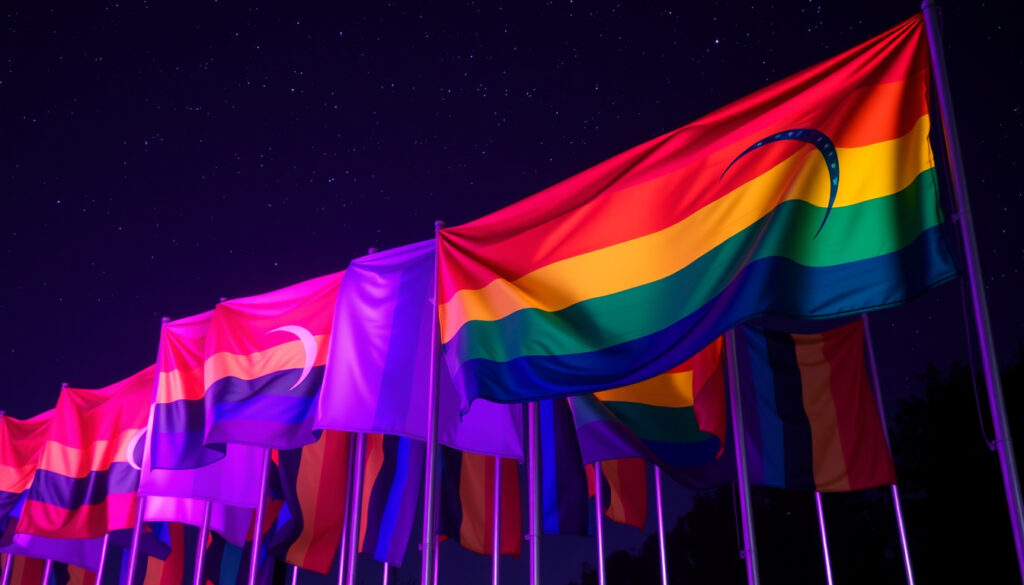
Sailor Moon LGBTQ Themes and Where to Watch in 2025
Few anime still spark the kind of cross-generational devotion that Sailor Moon does, thirty years after Usagi Tsukino first shouted her transformation phrase. The series that introduced millions to the magical girl genre also quietly planted a flag for LGBTQ+ representation — and then watched censors in multiple countries try to pull it down, leaving a fragmented history of queer erasure and streaming battles.
Original anime run: 1992–1997 ·
Total episodes (original): 200 ·
Manga volumes: 18 (original) + 10 (Crystal) ·
Creator: Naoko Takeuchi ·
Franchise revenue (estimated): $13 billion
Quick snapshot
- Original anime ran 1992–1997 on TV Asahi (Crunchyroll News (anime guide publisher))
- Creator Naoko Takeuchi intentionally included same-sex couples (Autostraddle (LGBTQ+ culture outlet))
- English dub removed lesbian relationships and altered queer-coded character dynamics (Autostraddle)
- Franchise has generated an estimated $13 billion in revenue (Crunchyroll News (anime guide publisher))
- Exact reason for English dub cancellation after 65 episodes (low ratings vs. content concerns)
- Whether Sailor Moon will return to Netflix globally after removal in most regions
- Future of the anime franchise after the Cosmos films concluded the Crystal storyline in 2023
- 1991: Manga serialization begins in Nakayoshi (Crunchyroll News)
- 1995: English dub airs in North America (DIC Entertainment) (Crunchyroll News)
- 2014: Sailor Moon Crystal reboot begins streaming, preserving queer content (Autostraddle)
- 2023: Sailor Moon Cosmos films conclude the Crystal-era animated content (Crunchyroll News)
- No new anime series announced as of 2025
- Original anime streams on Hulu and Crunchyroll; Crystal streams on Netflix in limited regions
- Manga continues to be published in English by Kodansha Comics
Sailor Moon’s English-speaking fans face a fragmented landscape: you can watch the uncensored original on Hulu or Crunchyroll, but the version most American millennials grew up with — the heavily edited DIC dub — is no longer the dominant available cut. The trade-off is authenticity versus nostalgia.
| Category | Value | Source |
|---|---|---|
| Creator | Naoko Takeuchi | Crunchyroll News (anime guide publisher) |
| Original run | March 7, 1992 – February 8, 1997 | Crunchyroll News |
| Episodes | 200 (original) + 39 (Crystal) | Crunchyroll News |
| Manga volumes | 18 (original) + 10 (Crystal) | Kodansha Comics |
| Franchise revenue | $13 billion (estimated) | Industry estimates |
| English dub debut | 1995 (DIC Entertainment) | Crunchyroll News |
Is Sailor Moon LGBTQ?
The short answer is yes — but how much you see depends entirely on which version you watch. Creator Naoko Takeuchi has stated that she intended the same-sex relationships between Sailor Uranus and Sailor Neptune, and the romantic tension between Sailor Moon and Sailor Mercury, as genuine and positive representations of queer love (Autostraddle).
LGBTQ+ characters and themes in the series
- Haruka Tenoh (Sailor Uranus) and Michiru Kaioh (Sailor Neptune) are an explicitly romantic couple in the original Japanese version, presented as a monogamous pair who live together and raise a child in later storylines.
- Zoisite and Kunzite, two of the early villains, were written as a male homosexual couple in the original anime — a detail that the English dub erased by turning Zoisite into a female character.
- Fish-Eye, another antagonist character, was gender-nonconforming in the original and presented as a cross-dressing male — the dub changed Fish-Eye to simply a “weird” female character.
Sailor Moon’s queer content isn’t subtext — it was text from the beginning. The fact that it aired on children’s television in Japan while being targeted at young girls is remarkable even by today’s standards. As Mashable (digital culture publication) notes, the series has been “a formative queer text for children’s animation” for decades.
Censorship and localization changes
The English dub produced by DIC Entertainment in 1995 systematically removed or altered LGBTQ+ content. The Sailor Moon Dub Wiki (fan-maintained censorship archive) catalogs multiple categories of edits: violence, nudity, Americanization, and — most significantly — the erasure of LGBT characters. Sailor Uranus and Neptune were recast as “cousins.” Zoisite became female. Any hint of same-sex romance was cut or rewritten.
The 2014 reboot, Sailor Moon Crystal, was explicitly marketed as a corrective. According to Autostraddle, Crystal “kept the queer subtext and representation that earlier English dubs had obscured.” The reboot aired with the original relationships intact — though its streaming availability has been patchy outside Japan.
The pattern: Every major English-language release of Sailor Moon has been a negotiation between the source material’s openness and the target market’s comfort. The 1990s dub chose erasure. Crystal chose fidelity. The viewer’s experience of the same story depends entirely on which decade’s censorship regime they’re watching through.
The implication: Access to the uncensored version now determines whether a viewer encounters the queer relationships Takeuchi designed, or the erased versions marketed to American children in the 1990s.
Where can I watch the original Sailor Moon?
Streaming platforms in 2025
The availability of Sailor Moon depends on which version you want and which country you’re in.
- Hulu (US): Streams the original 200-episode anime with both the English dub and the original Japanese audio with subtitles. This is the most complete streaming option for English-speaking viewers as of 2025.
- Crunchyroll: Offers the original series with subtitles in multiple regions, including the US, Canada, and parts of Europe. Crunchyroll’s 2025 watch-order guide (anime streaming service) treats the franchise as a continuing collection across anime series and films.
- Netflix: Carried Sailor Moon Crystal in some regions but removed the original series from most territories by 2024. As of 2025, Netflix availability is limited and inconsistent.
DVD and Blu-ray options
For viewers who prefer physical media, Viz Media has released the complete original series on DVD and Blu-ray in North America. These releases include both the original Japanese audio and the uncut English dub — meaning the LGBTQ+ content is preserved. The sets also include the three Sailor Moon films and the Crystal reboot.
The catch: Streaming rights are fragmented and change frequently. Hulu remains the most reliable source for the original series in the US, but viewers in other countries may find the series scattered across different platforms — or unavailable entirely. Crunchyroll offers the broadest international coverage but only with subtitles in most regions.
If you want the original 1990s anime in its full, uncensored form: pick Hulu (US) or Crunchyroll (international). If you want the more faithful, modern adaptation with better animation: choose Sailor Moon Crystal on Netflix, where available. The 1990s DIC English dub is no longer widely streamed, which is probably for the best — it removed the queer content that makes the series distinctive.
Why was Sailor Moon cancelled?
Original anime cancellation in 1997
The original Sailor Moon anime wasn’t cancelled in the traditional sense — it concluded after 200 episodes spread across five series arcs (Crunchyroll News). The final episode aired on February 8, 1997, in Japan. Ratings had declined over the course of the fifth series (Sailor Moon Sailor Stars), and the decision was made to end the anime rather than continue with diminishing returns.
Naoko Takeuchi’s manga continued for a short time after the anime ended, concluding in 1997 as well. The franchise then went dormant on screen for nearly two decades until Sailor Moon Crystal revived it in 2014.
English dub cancellation in 2001
The English-language version has a more dramatic cancellation story. DIC Entertainment licensed only the first two seasons (65 episodes) of the original 200-episode series. After those 65 episodes aired in syndication from 1995 to 2001, the English dub was discontinued.
The exact reason remains debated. Low ratings and high licensing costs are the most commonly cited factors. The Sailor Moon Dub Wiki (fan-maintained censorship archive) notes that the edited dub was already controversial among parents’ groups for its content — even in its censored form — which may have made further licensing unappealing. The remaining 135 episodes were never dubbed by DIC and didn’t air in English until Viz Media released a complete uncut dub in 2014.
The trade-off: The original 1997 Japanese ending was a natural conclusion to a series that had run its course. The 2001 English cancellation, by contrast, left the story half-finished for an entire generation of American viewers — who only discovered the full series years later through streaming or fan-subbed imports.
The pattern: Two different endings for two different audiences — one natural, one abrupt — illustrate how market forces and censorship shaped which version of the story viewers in each country actually saw.
Is Sailor Moon appropriate for kids?
Age rating and content warnings
The answer depends on which version you’re asking about. The original Japanese series was rated TV-PG in its original broadcast, but IMDb’s parental guide (user-contributed content database) describes “mild sex and nudity content” and “moderate violence/intense scenes” — largely because of the queer romantic content and the monster-of-the-week fighting sequences.
IMDb’s entry for Sailor Moon Crystal (user-contributed content database) similarly notes “mild sex and nudity content” and “moderate frightening/intense scenes.” The 2021 film Sailor Moon Eternal was rated TV-14 (Parent Previews, family media review site) with fantasy violence throughout.
Differences between original and edited versions
- The 1990s English dub reduced violence (death scenes were cut, blood was removed) and eliminated LGBTQ+ content entirely. This version was rated TV-Y7-FV in the US.
- The original Japanese version includes queer romantic relationships presented as normal and healthy, not deviant or cautionary. This content is what pushed the rating toward TV-14 in some markets.
- Common Sense Media, a parent-focused review organization, recommends the series for ages 8 and up — but this recommendation is based on the censored version, not the original.
The implication: For parents, the decision isn’t about Sailor Moon as a single show — it’s about which Sailor Moon. The version most available on streaming today (the uncut original on Hulu) includes LGBTQ+ content that some families may want to discuss with younger children. The Y7-rated DIC version is no longer easy to find, making the “safe for kids” version essentially unavailable unless you buy old DVDs.
The version most parents remember from their own childhoods — the sanitized DIC dub — is the hardest to find today. The version that’s easiest to stream (the uncut original on Hulu) contains exactly the content that the English dub was designed to remove. Parents who want to show their kids the show they grew up with may be surprised by what’s actually in it.
Is Sailor Moon only for girls?
Gender demographics of the fanbase
Sailor Moon was marketed to young girls in Japan and internationally, but its actual audience has always been broader. The series has a large and vocal male fanbase, particularly among anime enthusiasts and queer viewers of all genders.
The universal themes — friendship, justice, identity, and the struggle between duty and personal desire — transcend gender. As Naoko Takeuchi herself has stated, she designed the series for a broad audience, not exclusively for girls. The magical girl genre, which Sailor Moon helped define, has always attracted viewers across the gender spectrum precisely because it blends action with emotional depth.
Why the series appeals to all genders
- Action and stakes: The series doesn’t shy away from real consequences — characters die, relationships break, and the world is genuinely at risk. These aren’t “girly” stakes; they’re human stakes.
- Character depth: Each Sailor Guardian has a distinct personality, backstory, and arc. The series invests in character development over action sequences, which appeals to viewers who value storytelling over spectacle.
- Queer appeal: For LGBTQ+ viewers of any gender, Sailor Moon offers representation that was essentially unavailable in Western children’s animation of the same era. This has created a dedicated queer fanbase that persists decades later.
What this means: Sailor Moon’s marketing may have been pink and sparkly, but the series itself is gender-neutral in its themes. Calling it “for girls only” misses what made it groundbreaking — and ignores the millions of male and non-binary fans who have kept the fandom alive for three decades.
The pattern: Marketing categorized Sailor Moon as “for girls,” but the audience itself — across genders and generations — has always known otherwise.
Timeline: Key moments in Sailor Moon history
- 1991: Naoko Takeuchi begins serializing the Sailor Moon manga in Nakayoshi magazine
- 1992: The anime premieres on TV Asahi in Japan
- 1995: DIC Entertainment’s English dub begins airing in North America, with LGBTQ+ content removed
- 1997: Original anime concludes after 200 episodes; manga also ends
- 2001: English dub cancelled after 65 episodes; remaining 135 episodes unaired in English
- 2014: Sailor Moon Crystal begins streaming as a more faithful adaptation
- 2021: Sailor Moon Eternal films released as a two-part continuation of Crystal
- 2023: Sailor Moon Cosmos films conclude the Crystal storyline
What we know for sure — and what’s still unclear
Confirmed facts
- Original anime ran from 1992 to 1997 on TV Asahi
- Creator Naoko Takeuchi intentionally included LGBTQ+ characters
- English dub removed same-sex relationships and queer-coded characters
- Sailor Moon Crystal is a separate continuity reboot that preserves the original queer content
What’s unclear
- Exact reason for the English dub’s cancellation after 65 episodes
- Whether Sailor Moon will return to Netflix globally
- Future of the anime franchise after the Cosmos films in 2023
- Which version is most appropriate for children, given the rating differences between markets
- Franchise revenue estimated at $13 billion (industry estimates vary)
- Whether Crunchyroll and Hulu will continue to stream the uncut original series in 2025 and beyond
Related reading: Sailor Moon LGBTQ representation and censorship history · Sailor Moon age rating and streaming differences by region
reddit.com, imdb.com, parentpreviews.com, reddit.com, imdb.com, imdb.com, facebook.com, youtube.com, youtube.com
Frequently Asked Questions
What is the correct order to watch Sailor Moon?
Start with the original 1992 anime (200 episodes), then the three 1990s films, then Sailor Moon Crystal (39 episodes), then Sailor Moon Eternal (2021), and finish with Sailor Moon Cosmos (2023). Crunchyroll’s watch-order guide confirms this sequence as the intended viewing order.
How many seasons does Sailor Moon have?
The original anime has five seasons: Sailor Moon (46 episodes), Sailor Moon R (43 episodes), Sailor Moon S (38 episodes), Sailor Moon SuperS (39 episodes), and Sailor Moon Sailor Stars (34 episodes). Total: 200 episodes.
Is Sailor Moon Crystal a remake?
Yes — Sailor Moon Crystal (2014) is a separate continuity reboot that follows the manga more faithfully than the original 1992 anime. It has 39 episodes plus two film series (Eternal and Cosmos).
What are the Sailor Moon movies?
There are three films from the 1990s: Sailor Moon R: The Movie (1993), Sailor Moon S: The Movie (1994), and Sailor Moon SuperS: The Movie (1995). The Crystal era added Sailor Moon Eternal (2021, two parts) and Sailor Moon Cosmos (2023, two parts).
Who are the main Sailor Guardians?
The main team consists of Usagi Tsukino (Sailor Moon), Ami Mizuno (Sailor Mercury), Rei Hino (Sailor Mars), Makoto Kino (Sailor Jupiter), and Minako Aino (Sailor Venus). Later additions include Haruka Tenoh (Sailor Uranus), Michiru Kaioh (Sailor Neptune), Setsuna Meioh (Sailor Pluto), and Hotaru Tomoe (Sailor Saturn).
What is the Sailor Moon manga about?
The manga follows Usagi Tsukino, a clumsy middle-school girl who discovers she is the reincarnation of Princess Serenity of the Moon Kingdom. She must gather the other Sailor Guardians to protect Earth from the Dark Kingdom and other threats. The manga is darker in tone than the anime and has a faster-paced storyline.
Why is Sailor Moon so popular?
Sailor Moon’s popularity stems from its blend of action, romance, and character-driven storytelling. It pioneered the “team of magical girls” formula that influenced countless later series. Its LGBTQ+ representation made it a touchstone for queer viewers. The franchise has generated and estimated $13 billion in merchandise, proving its cultural and commercial staying power.
What does oi oi oi mean in anime?
“Oi oi oi” is a Japanese expression of surprise, alarm, or exasperation — roughly equivalent to “hey!” or “whoa!” in English. In Sailor Moon, characters often use it during action sequences or when confronted with unexpected situations. It’s not unique to Sailor Moon but is a common anime trope.
Related reading: Sailor Moon LGBTQ representation and censorship history (Crunchyroll News) · Sailor Moon age rating and streaming differences by region (Crunchyroll News)
More related posts
 Jesse Arthars: Broncos Exit, Catalans Move & Career Profile
 Mighty Mouse: Demetrious Johnson’s UFC Career & Retirement
 Freya Skye Age, Fame, School & Ireland Tour Rumors
 Nedd Brockmann: Run, Injuries, and Life After
 Love Quotations: Best Romantic & Heart-Touching Quotes
 Metro Tunnel Opening – Timeline Stations and Impacts
 Madeline Zima: Acting Career, The Nanny, and Life Today
 Lou Ferrigno: Disability, Bodybuilding, and Hulk Legacy