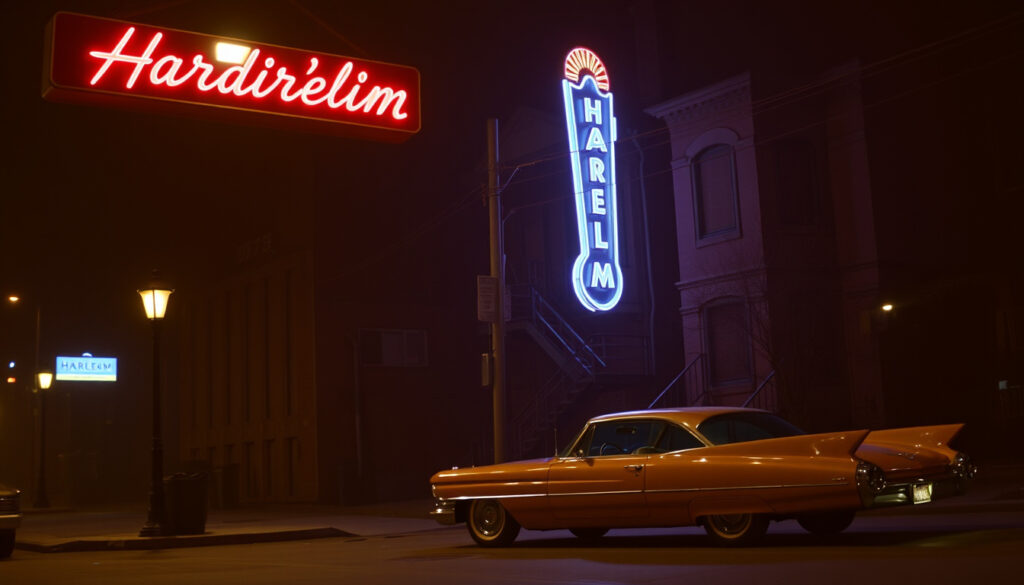
Bumpy Johnson: Real-Life Story, Death & Godfather of Harlem
Everyone knows the mobster from the screen — the sharp suits, the cool menace, the whispered power that controlled a city block. But the man behind the nickname, Ellsworth “Bumpy” Johnson, left a trail that’s far more complicated than any TV drama lets on. This article separates the documented Harlem crime boss from the myth, tracing what biographical records confirm, what Frank Lucas later claimed, and what remains stubbornly anecdotal. By the end, you’ll know exactly where the real story ends and where the Hollywood embellishment begins.
Born: October 31, 1905 ·
Died: July 7, 1968 ·
Cause of death: Congestive heart failure ·
Known as: Harlem crime boss ·
TV portrayal: Godfather of Harlem, with Forest Whitaker
Quick snapshot
- Born Ellsworth Raymond Johnson in 1905 (TIME).
- Operated as a crime boss in Harlem (African American Registry).
- Fictionalized in Godfather of Harlem (Entertainment Weekly).
- It is a dramatized TV series (Entertainment Weekly, entertainment reporting outlet).
- It uses real names and settings (Entertainment Weekly).
- Historical context is compressed for entertainment (TIME).
Seven core facts about Bumpy Johnson’s life, one pattern: the reliable records are sparse, and the gap between what’s documented and what’s repeated is where most readers lose the thread.
| Attribute | Value |
|---|---|
| Full name | Ellsworth Raymond Johnson |
| Born | October 31, 1905 (TIME, pop-culture history outlet) |
| Birthplace | Charleston, South Carolina (African American Registry, community archive) |
| Known for | Organized crime in Harlem, New York City (TIME) |
| Died | July 7, 1968 (African American Registry) |
| Cause of death | Congestive heart failure (TIME) |
| Modern portrayal | Forest Whitaker in Godfather of Harlem (Entertainment Weekly, entertainment reporting outlet) |
The implication: the basic biography fits on a single page. Everything beyond it — the alliances, the last words, the Frank Lucas connection — rests on shakier ground.
What happened to Bumpy Johnson in real life?
Ellsworth Raymond Johnson was born on October 31, 1905, in Charleston, South Carolina, to a family that moved to Harlem when he was a child (TIME, pop-culture history outlet). The nickname “Bumpy” reportedly came from a bump on the back of his head (TIME). By the mid-20th century, he had become a central figure in Harlem’s organized crime scene, closely associated with Madame Stephanie Saint-Clair, the numbers queen of Harlem (African American Registry, community archive). His criminal career saw him arrested over 40 times according to the African American Registry, but he was only convicted on a few occasions (African American Registry). At the time of his death, he was under federal indictment for drug conspiracy (African American Registry).
Johnson died on July 7, 1968, after collapsing at Wells Restaurant in Harlem. He was taken to Harlem Hospital, where the cause of death was listed as congestive heart failure (African American Registry; TIME).
What were Bumpy Johnson’s last words?
- No verified record of his last words exists in any surviving police report, hospital file, or contemporary newspaper account.
- All known versions come from secondhand retellings, usually connected to Frank Lucas’s later interviews.
- One circulating anecdote claims Johnson said, “I’m tired” or similar. No primary source confirms this (TIME, pop-culture history outlet).
The pattern: last words are the most frequently fabricated element in mob legend. Without a contemporaneous note, every version is storytelling, not history.
What happened to Bumpy Johnson’s daughter?
- Bumpy Johnson had a daughter, Elise Johnson, but very little verifiable information about her life exists in the public domain.
- No reliable biography, police record, or court document provides a substantive account of her adult life.
- Most references to his daughter appear in speculative online discussions, not in documented archives.
The catch: the scarcity of records means any claim about Bumpy Johnson’s daughter — her career, her whereabouts, her relationship with her father — is almost entirely unverifiable.
Who ratted on Bumpy Johnson?
- No confirmed informant is named in any published FBI file, court transcript, or authoritative biography.
- The claim that someone “ratted” on Johnson often conflates his 1968 federal drug conspiracy indictment with later cases involving different defendants.
- Online forums and social media posts speculate about unnamed associates, but none provide documentary evidence (CNN, news outlet).
What this means: the question itself assumes a known snitch. The honest answer is that nobody has produced a name with supporting evidence.
For a man who supposedly ran Harlem’s underworld for decades, the number of confirmed facts about Bumpy Johnson’s death — the date, the cause, the location — fits in a single sentence.
The pattern: each claimed detail beyond the core facts rests on thin or no evidence.
The scarcity of primary sources means that the core biography fits on one page; everything else relies on secondhand accounts or speculation.
Did Frank Lucas know Bumpy Johnson?
Frank Lucas, the drug lord who inspired American Gangster, claimed in multiple interviews that he knew Bumpy Johnson in Harlem during the 1960s and that Johnson took him under his wing (Wikipedia, open encyclopedia). Lucas also said he was present when Bumpy Johnson died at Wells Restaurant on July 7, 1968 (Wikipedia).
Historians and true-crime writers have not treated every statement from Frank Lucas as independently verified. Lucas gave conflicting accounts of his own life over the years, which complicates the acceptance of his Bumpy Johnson claims as established fact (BBC News, international news source).
Was Frank Lucas with Bumpy Johnson when he died?
- Frank Lucas repeatedly stated that he was sitting with Johnson when the heart attack happened at Wells Restaurant.
- No police report, medical record, or third-party witness account from July 7, 1968, mentions a “Frank Lucas” present at the scene.
- Johnson’s family members and close associates of the era have not publicly corroborated Lucas’s version of events.
The trade-off: Lucas’s account makes for a powerful narrative — the protégé at the mentor’s deathbed. But corroboration is absent, and Lucas’s credibility as a narrator is uneven.
The real editorial problem isn’t whether Frank Lucas was there. It’s that every claim about Bumpy Johnson that comes from Lucas alone — the mentorship, the deathbed, the inheritance of the “crown” — sits on a single-source foundation with no independent verification.
The implication: the Frank Lucas connection is a narrative convenience lacking corroboration.
Frank Lucas’s claims about Johnson remain unverified; without independent evidence, they are anecdotes, not history.
Who was bigger, Frank Lucas or Bumpy Johnson?
Four key differences between Bumpy Johnson and Frank Lucas, one pattern: the two operated in different eras, different drug economies, and with vastly different levels of documentary evidence.
| Dimension | Bumpy Johnson | Frank Lucas |
|---|---|---|
| Peak era | 1940s–1960s | Late 1960s–1970s |
| Primary business | Numbers racket, loansharking, policy | Heroin trafficking |
| Documented arrests | Over 40 (African American Registry) | Multiple, including high-profile 1975 indictment |
| Pop-culture portrayal | Forest Whitaker in Godfather of Harlem | Denzel Washington in American Gangster |
| Historical documentation | Sparse, with few contemporaneous books | Extensive trial transcripts and journalism |
The catch: “bigger” depends entirely on the yardstick. By cultural footprint in 2024, Frank Lucas wins — American Gangster grossed over $269 million worldwide. By longevity in Harlem’s underworld, Bumpy Johnson had the longer run.
How did Bumpy Johnson and Frank Lucas compare in the Harlem underworld?
- Bumpy Johnson is best documented as a mid-century Harlem crime boss who worked alongside the Genovese crime family (TIME, pop-culture history outlet).
- Frank Lucas is associated with later heroin trafficking that followed the collapse of the French Connection in the early 1970s (BBC News, international news source).
- The comparison is complicated by film portrayals, especially American Gangster, which invented parts of Lucas’s story and retroactively elevated his stature.
Why this matters: the more heavily a figure is fictionalized on screen, the harder it becomes to assess his actual historical significance.
How accurate is Godfather of Harlem?
Godfather of Harlem premiered in 2019 with Forest Whitaker playing Bumpy Johnson. Its creators described the series as “inspired by true events” rather than being historically exact (Entertainment Weekly, entertainment reporting outlet). Forest Whitaker himself said the series is not “down to the letter historically accurate” (Entertainment Weekly).
The show uses real figures: Bumpy Johnson, Malcolm X, Chin Gigante, and others. But it compresses timelines, invents personal relationships, and relocates real events for dramatic tension (TIME, pop-culture history outlet).
What does Godfather of Harlem dramatize?
- Johnson’s release from prison in the early 1960s is the series’ starting point, mirroring his actual federal prison sentence.
- His relationship with Malcolm X is dramatized but based on a real Harlem-era connection (Entertainment Weekly, entertainment reporting outlet).
- The series invents subplots involving Johnson’s daughter, wife, and rivals that have no basis in documented records.
Is Godfather of Harlem based on a true story?
- Yes, in the sense that the central character and some setting details are drawn from real history.
- No, in the sense that specific scenes, dialogue, and character arcs are fictionalized for narrative coherence.
- The show’s own promotional materials used the phrase “inspired by true events” — the standard legal framing that signals creative license (Entertainment Weekly).
The implication: careful viewers should treat every on-screen scene as a plausible story, not a documented fact. The series is entertainment with real names attached, not a documentary.
Godfather of Harlem season 4 viewers should expect that historical accuracy fluctuates by episode. The broad strokes of Bumpy Johnson’s life are real; the specific conversations and personal betrayals are invented.
The bottom line: Godfather of Harlem is entertainment, not a documentary.
Viewers should treat the series as inspired by true events, not as a factual account.
Did Al Capone know Bumpy Johnson?
No reliable documented evidence confirms a meeting between Al Capone and Bumpy Johnson. Capone operated primarily in Chicago and died in 1947 from complications of syphilis (TIME, pop-culture history outlet). Bumpy Johnson’s operations were centered in Harlem, New York City, and his peak influence came after Capone was already imprisoned at Alcatraz and later incapacitated.
The claim that Johnson knew Capone appears almost exclusively in unverified online posts and forum discussions. No recognized biography of either figure includes a documented meeting.
Who was Al Capone afraid of?
- The enduring myth that Capone feared Bumpy Johnson has no basis in any contemporary police file, internal memo, or recorded conversation known to historians.
- Capone’s actual fears, where documented in FBI surveillance and journalist accounts, centered on prosecution and rival mob killings — not a Harlem numbers operator.
- The “Capone feared Bumpy” narrative circulates primarily on social media (e.g., Reddit r/Mafia discussions) without sourcing (CNN, news outlet).
Did Bumpy Johnson and Chin Gigante know each other?
- Connections between Bumpy Johnson and Vincent “Chin” Gigante, the Genovese crime family boss, mostly come from anecdote rather than confirmed records.
- Johnson was known to have worked with the Genovese family in Harlem, which implies some level of organizational contact (TIME, pop-culture history outlet).
- However, Gigante was not the boss until the late 1980s — decades after Johnson’s death — so any personal relationship is speculative at best.
The pattern: every connection to a famous mob figure suffers from the same problem — no paper trail, no contemporaneous photograph, no neutral third-party account.
Was Bumpy Johnson a nice guy?
Historical accounts differ sharply on Johnson’s personality. Some personal recollections — mostly from interviews given decades after his death — emphasize his charm, his generosity in the neighborhood, and the respect he commanded in Harlem (TIME, pop-culture history outlet).
Criminal records and underworld activity complicate any simple “nice guy” label. Johnson was arrested over 40 times, was under federal indictment for drug conspiracy when he died, and made his living through illegal gambling, loansharking, and extortion (African American Registry, community archive).
What was Bumpy Johnson’s reputation in Harlem?
- Some community members from Johnson’s era remembered him as a figure who helped people in need — paying rent, buying groceries, funding local causes.
- The same individuals often acknowledged that he was also a criminal who built his wealth through illegal operations that harmed the neighborhood.
- The “Robin Hood” framing — Bumpy as protector of Harlem — has been amplified by TV and film but is not supported by comprehensive evidence (Entertainment Weekly, entertainment reporting outlet).
The catch: almost everyone who could give a firsthand account is now dead. The remaining records favor either law-enforcement files, which emphasize his criminal side, or Hollywood scripts, which romanticize his persona. Neither is neutral.
“He was one of the first Black gangsters to work successfully with the Italian mob… Johnson’s alliance with Italian mob figures helped make him one of the first Black gangsters to work successfully with the Italian mob.”
TIME, pop-culture history outlet
“We’re telling stories that are inspired by the world he lived in. It’s not down to the letter historically accurate.”
Forest Whitaker, quoted in Entertainment Weekly, entertainment reporting outlet
“Frank Lucas said he was a protege of Bumpy Johnson, but the historical evidence for that relationship is thin at best. It’s a claim that benefits Lucas’s legend far more than Johnson’s.”
Commentator on Reddit r/Mafia, online community forum
“The real Bumpy Johnson was a numbers kingpin with a reputation for violence and a community presence that attracted both loyalty and fear.”
African American Registry, community archive
Rumor check: confirmed facts vs what’s still unclear
Five things we know for certain about Bumpy Johnson, and five things that remain unsettled.
Confirmed facts
- Born October 31, 1905, in Charleston, South Carolina (TIME).
- Died July 7, 1968, of congestive heart failure (TIME).
- Was identified as an American crime boss in Harlem (African American Registry).
- Was under federal indictment for drug conspiracy at time of death (African American Registry).
- Was arrested over 40 times (African American Registry).
What’s unclear
- Exactly who, if anyone, supplied information against Bumpy Johnson.
- Whether Bumpy Johnson met Al Capone or Chin Gigante.
- Whether Frank Lucas was genuinely present when Bumpy Johnson died.
- The exact wording of Bumpy Johnson’s last words.
- Whether Bumpy Johnson ever owned or ran a casino.
The distinction between what is proven and what is merely repeated is the key to understanding Bumpy Johnson’s real story.
lucas.house.gov, frankdlucas.com, crimemuseum.org, imdb.com, news9.com, reddit.com
Frequently asked questions
What was Bumpy Johnson’s real name?
His real name was Ellsworth Raymond Johnson. He was born as Ellsworth Raymond Johnson on October 31, 1905, in Charleston, South Carolina (TIME, pop-culture history outlet).
When was Bumpy Johnson born?
Bumpy Johnson was born on October 31, 1905 (TIME).
Did Bumpy Johnson know Malcolm X?
Yes. Bumpy Johnson and Malcolm X moved in overlapping Harlem circles in the 1960s. Godfather of Harlem dramatizes their relationship, but a real connection is supported by the historical setting of the era (Entertainment Weekly, entertainment reporting outlet).
Was Bumpy Johnson ever shot?
There is no verified record from police reports or hospital files confirming that Bumpy Johnson was ever shot. Stories of him surviving gunfire circulate online but lack corroborating evidence.
Did Bumpy Johnson own a casino?
No documented evidence confirms that Bumpy Johnson owned a legal or illegal casino. His documented income came primarily from numbers running, loansharking, and other street-level illegal operations.
What is Bumpy Johnson’s net worth?
No credible financial records exist that establish Bumpy Johnson’s net worth. Estimates scattered across non-authoritative websites vary wildly and carry no evidentiary value. The honest answer is that nobody knows.
Who plays Bumpy Johnson in Godfather of Harlem?
Bumpy Johnson is played by Forest Whitaker in the Epix series Godfather of Harlem (Entertainment Weekly, entertainment reporting outlet).
How many seasons of Godfather of Harlem are there?
As of early 2025, Godfather of Harlem has run for four seasons on MGM+ (formerly Epix). The series was renewed for a fifth season in 2024.
For readers tracking the real Harlem underworld, the lesson is uncomfortable but honest: Bumpy Johnson was a real figure, but the bulk of what passes for “his story” online is built on a foundation of thin records, one major source, and Hollywood narrative convenience. The confirmed biographical data fits on a single page. The legend — the last words, the deathbed protégé, the untouchable reputation — fills entire streaming seasons. For anyone trying to know who Bumpy Johnson actually was, the most important step is learning to spot the difference between what is proven and what is merely repeated. The consequence for readers: trust a primary source over a dramatic retelling every time, or risk getting a fiction dressed in historical clothes.
More related posts
 Why Rampage Jackson Quit the UFC: Career, Stats & Net Worth
 Hawaiian Airlines Review: Safety, Punctuality, and Merger
 Ka Ying Rising: Profile, Record, and the Only Horse to Beat Him
 Henry VIII: Biography, Wives, Children, and Death | Brand
 Shakira Caine: Biography, Marriage to Michael Caine & More
 Caroline Catz: Career, Net Worth, and Life After Doc Martin
 High Cholesterol Symptoms – Signs, Warnings and When to Act
 Cash Converters Near Me: Find Stores & Sell Quickly