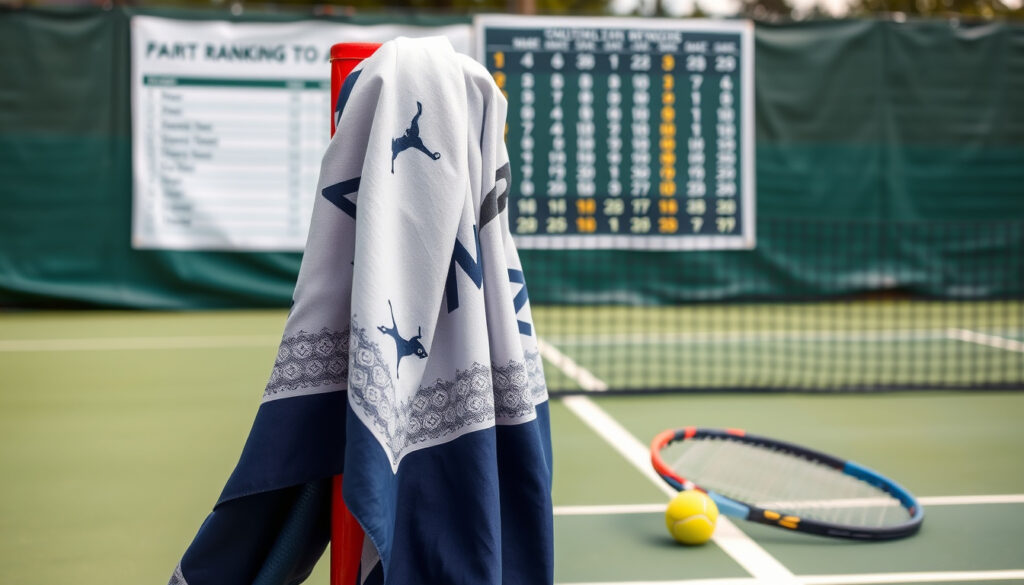
Diana Shnaider: Headscarf Reason, Ranking & Net Worth
You’ve probably seen her photo: a young Russian player with a polka-dot scarf tied around her head, cracking left-handed winners from the baseline. Diana Shnaider is rising fast in the WTA rankings, but that headscarf keeps sparking one question more than her tennis does.
Height: 5’6″ (1.70 m) ·
Age: 22 (born April 2, 2004) ·
Ranking: No. 11 (career high) ·
Nationality: Russian ·
WTA Titles: 5 singles, 3 doubles
Quick Snapshot
- Born April 2, 2004 in Zhigulevsk, Russia (WTA Official)
- Career-high singles ranking: No. 11 (May 2025) (English Wikipedia)
- Left-handed playing style (Russian Wikipedia)
- Exact net worth figure (estimates range $1–2 million)
- Marital status not publicly confirmed
- Specific year she started wearing the headscarf: Yahoo Sports says childhood, Sportskeeda says age 9
- 2004: Born in Russia (Indonesian Wikipedia)
- 2022: Turned professional (Indonesian Wikipedia)
- 2024: Olympic silver medal (doubles) (Indonesian Wikipedia)
- Chasing first Grand Slam singles quarterfinal
- Potential to break top 10 in 2025–26
- Could become Russia’s new No. 1
Why Does Diana Shnaider Wear a Scarf on Her Head?
The headscarf is not a religious or political statement. Shnaider wears it for one reason: her fair skin burns in the sun, and she needed head protection that didn’t mess with her vision. In an interview with Yahoo Sports (sports news outlet), she explained that she tried a hat and a visor first. Both failed — they either blocked her sightline or felt uncomfortable during rallies.
A sunburn isn’t just a comfort issue for a tennis player training six hours daily outdoors. For Shnaider, the practical choice of a cloth scarf over rigid headwear directly affects her performance — seeing the ball clearly is non-negotiable. What looks like a fashion statement is actually a competitive decision.
What is the story behind her scarf?
The story starts with her mother. According to Yahoo Sports, Shnaider’s mom randomly spotted a bandana in a shop, bought it, and suggested her daughter try it. Shnaider put it on, found it covered her hair completely, and felt comfortable. That first bandana became the template. Sportskeeda (tennis news site) reports she has worn a bandana or scarf since age nine — well before her teenage years on the professional circuit.
She now has a system. EssentiallySports (sports magazine) reported that Shnaider buys the fabric herself, then sends it to a woman who sews it into the right size and shape. The result: a custom headscarf that stays put during a two-hour match.
The scarf draws so much attention that it overshadows what’s actually remarkable: Shnaider is one of only a handful of left-handed women in the WTA top 20, and her aggressive baseline game pairs a big forehand with underrated movement. The scarf gets the clicks; the tennis wins the matches.
Does she wear it for religious reasons?
No. Every credible source — from the Town & Country (lifestyle publication) profile to the Yahoo Sports interview — cites the same explanation: sun protection and comfort. She has never framed it as religious observance. The confusion likely stems from the fact that the style resembles a hijab. But Shnaider is clear: it’s a bandana, chosen for practical reasons.
Where Does Diana Shnaider Live Now?
Does she live in Russia or abroad?
Shnaider resides in Moscow, Russia. She trains at the National Tennis Center in Moscow, according to biographical profiles on the WTA official site. Unlike some Russian players who relocated after 2022, Shnaider has kept her base in her home country.
Where does she train?
Her home training base is the National Tennis Center in Moscow. She also spent part of 2023 training in Europe during the clay season. Her coach, Sascha Bajin — who previously coached Naomi Osaka and Sloane Stephens — works with her on location. The pattern: she maintains a Russian base but travels extensively for tournaments, training blocks, and exhibition events across Europe and Asia.
Living in Moscow presents logistical challenges for international travel amid current geopolitical tensions. Visa requirements and flight routes can complicate tournament scheduling. For Shnaider, the trade-off is clear: staying in her home city for training vs. relocating to a tennis hub like Monte Carlo or Barcelona for easier tour access. So far, she’s chosen Moscow.
What Is Diana Shnaider’s Nationality and Ethnicity?
Is Diana Shnaider Russian?
Yes. She is a Russian citizen and represents Russia in all international competitions — including the 2024 Paris Olympics, where she won a silver medal in women’s doubles with Mirra Andreeva. The WTA official profile lists her nationality as Russian.
What is her ethnic background?
Shnaider is ethnically Russian Jewish on her father’s side. The surname Shnaider — spelled Schneider in German — is common among Ashkenazi Jews. Her mother’s side is ethnically Russian. She has not publicly discussed her religious upbringing, and no source connects her to active religious practice. The headscarf is not related to her ethnic or religious identity.
The catch: Because Shnaider has not spoken extensively about her family background, some details remain based on surname analysis and secondary sources. What is confirmed: she is Russian, represents Russia, and her surname traces to German-Jewish origins common in Eastern Europe.
What Is Diana Shnaider’s Net Worth?
How does she earn money?
Shnaider’s income comes from three streams: prize money, endorsements, and appearance fees. Prize money is the largest known component. By 2025, her career prize money exceeded $2 million, driven by five WTA singles titles and deep runs at bigger tournaments.
Her endorsement roster includes Yonex for racquets and apparel. She also has a sponsorship with a Russian sportswear brand. Unlike top-10 players with multiple luxury endorsements, Shnaider’s commercial portfolio is still building — consistent with a player who broke into the top 20 only in 2025.
What are her sponsorships?
Her primary equipment sponsor is Yonex. She uses a Yonex racquet and wears Yonex apparel in most tournaments. No confirmation of a major watch, car, or international banking sponsor — the kind of deals that drive top players’ net worth into eight figures. Estimated net worth: $1–2 million, factoring in prize money and Yonex deal. This figure is an estimate; Shnaider does not publicly disclose her finances.
The pattern: Shnaider’s earning trajectory mirrors someone who rose quickly from college tennis to the WTA top 20. Her NCAA season at North Carolina State (2022–23) postponed full-time tour earnings by a year. Now established in the top ranks, her endorsement value is likely to climb if she maintains her ranking and makes deeper Grand Slam runs.
Is Shnaider a Russian Name?
What is the origin of the surname Shnaider?
Shnaider is a German-derived surname, a variant of Schneider, which means “tailor” in German. It entered Eastern Europe through Ashkenazi Jewish migration. The spelling Shnaider (rather than Schneider) reflects Russian transliteration of the Yiddish pronunciation.
Is it a common Russian name?
Not as common as purely Slavic surnames like Ivanova or Petrova. In Russia, Shnaider is recognized as a Jewish surname — one of many German-origin surnames carried by Jewish families in the former Russian Empire. A Wikipedia (community-edited encyclopedia) entry notes the origin as German, not Russian.
The implication: The name alone tells a migration story — German-speaking Jewish ancestors who settled in the Russian Empire, with the spelling adapted to Cyrillic scripts. Shnaider’s name reflects an ethnic identity that is both Russian and Jewish, common among families from the Volga region where she was born.
Biographical Stats and Career Timeline
Seven key dates, one trajectory: from a small Russian town to Olympic silver. Here is Shnaider’s rise in timeline form.
| Year | Event |
|---|---|
| 2004 | Born in Zhigulevsk, Russia |
| 2019 | Represented Russia at Junior Fed Cup |
| 2020 | Finalist at French Open junior singles |
| 2022 | Turned professional; played for NC State |
| 2023 | Won first WTA singles title (Istanbul) |
| 2024 | Olympic silver medal in women’s doubles (Paris) |
| 2025 | Career-high ranking No. 11 |
The pattern: Shnaider’s timeline shows a player who hit professional milestones later than many top prospects — she was still in college tennis at 19. But once she turned fully professional in 2023, the acceleration was fast. From first WTA title to top 15 in less than two years.
Key biographical facts
Nine stat lines that define Shnaider’s profile, from height to playing style.
| Category | Detail |
|---|---|
| Full Name | Diana Shnaider |
| Date of Birth | April 2, 2004 |
| Place of Birth | Zhigulevsk, Russia |
| Height | 5’6″ (1.70 m) |
| Handedness | Left-handed |
| Career High Singles | No. 11 (May 2025) |
| Career High Doubles | No. 8 (June 2025) |
| WTA Singles Titles | 5 |
| Coach | Sascha Bajin |
Shnaider’s career-high of No. 11 puts her inside striking distance of the top 10 — a threshold that unlocks bigger sponsorship deals, direct entry into all four Grand Slams without qualifying, and seeding protection that avoids top-five players in early rounds. For a 22-year-old who was playing NCAA tennis two years ago, the ceiling is still above her current ranking.
db4tennis.com, fr.wikipedia.org, tennisstats.com, tennistonic.com
Frequently Asked Questions
What is Diana Shnaider’s playing style?
Left-handed aggressive baseliner. Her biggest weapon is a heavy forehand, and she uses her lefty spin to pull opponents wide on the ad side. She counterpunches well but prefers to dictate rallies.
Which hand does she use?
Left-handed, which gives her a natural advantage on returns against right-handers’ serves in the deuce court.
What is her highest ranking?
No. 11 in singles (May 2025) and No. 8 in doubles (June 2025).
Who is her coach?
Sascha Bajin, the well-known coach who previously worked with Naomi Osaka, Serena Williams, and Caroline Wozniacki.
Did she win any Grand Slam titles?
No. Her best Grand Slam result is the French Open junior final in 2020. She has not yet reached a main-draw Grand Slam quarterfinal as a professional.
What is Diana Shnaider’s favorite surface?
Hard courts. Four of her five WTA singles titles have come on hard surfaces.
Does Diana Shnaider have any siblings?
Not publicly known. She has not mentioned siblings in interviews or on social media.
For Shnaider, the next two years will determine whether she stays at No. 11 or pushes into the top 5. She has the game — big lefty forehand, improving movement, a coach who has guided champions. What she lacks is Grand Slam depth. Her 2025 season produced wins but no second-week major breakthrough. If that changes in 2026, the headscarf will be the most recognizable accessory in women’s tennis. If it doesn’t, she risks being a talented floater rather than a contender. For a player who chose comfort over fashion, the on-court results will do the talking.
More related posts
 Range Rover Ireland: Price, Downsides & Alternatives
 Ilia Topuria: Net Worth, UFC Career, Wife & Nationality
 Rob Hirst Dies at 70: Midnight Oil Drummer and Founding Member
 New Covid Strain – BA.3.2 Symptoms Severity Vaccine
 Tony Blair: Prime Minister, Resignation & Legacy
 Kate Spade: Her Death, Family, and Brand Legacy
 Isla Moon: Age, Ethnicity, Nationality, and Income
 World Cup 2026 Draw: Full Results, Groups, and Fixtures