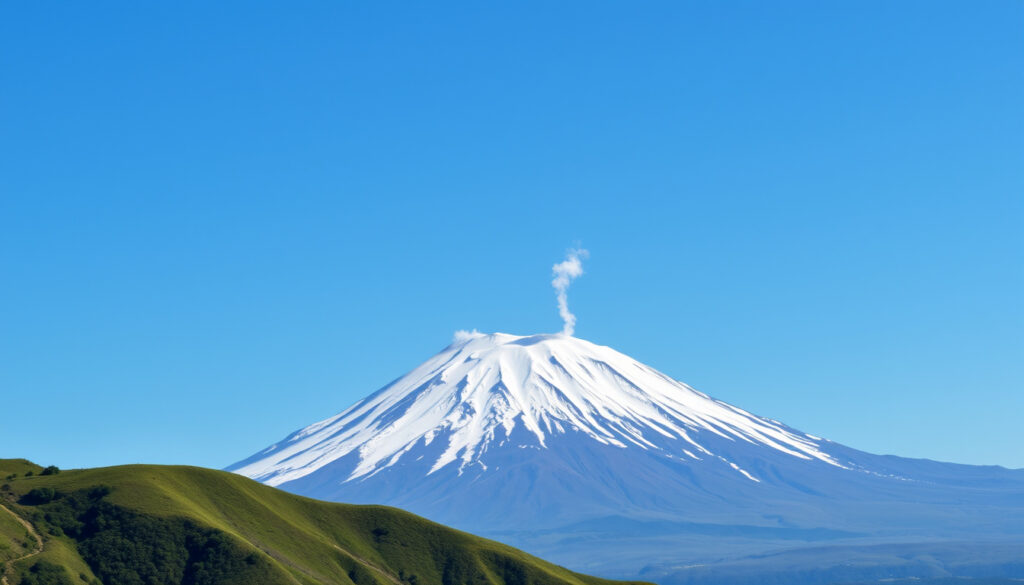
Mount Fuji Climbing: Volcano Facts & 2024 Rules
Few landmarks command the same mix of awe and practical planning as Mount Fuji. You might be drawn by the bucket-list climb, the volcanic mystique, or the sheer impossibility of a mountain that appears in ukiyo-e prints and smartphone backgrounds with equal grace. This guide stitches together the 2024 rules overhaul, the volcano’s real risk profile, and the climate realities you’ll face at 3,776 meters — so you know exactly what you’re signing up for.
Height: 3,776 m (12,388 ft) ·
Last eruption: 1707–1708 ·
Climbing season: July to early September ·
Annual climbers: approx. 300,000
Quick snapshot
- Mount Fuji is Japan’s highest peak at 3,776 m (the Official Website for Mt. Fuji Climbing)
- Last erupted December 16, 1707 – January 1, 1708 (The Japan Times)
- UNESCO World Heritage site since 2013 (the Official Website for Mt. Fuji Climbing)
- Exact date or likelihood of next eruption (the Official Website for Mt. Fuji Climbing)
- Whether the 2024 view-blocking barrier in Fujikawaguchiko will become permanent (The Japan Times)
- Long-term impact of climate change on snow cover (DW)
- 1707: Last major eruption (the Official Website for Mt. Fuji Climbing)
- 2024: Yamanashi introduces 2,000-yen fee and daily cap (ABC News)
- 2026: No eruption expected, but monitoring continues (The Japan Times)
- 2025 season rules may expand caps to Shizuoka routes (The Japan Times)
- Mountain hut prices likely to rise with upkeep costs (DW)
- Climate monitoring may alter climbing season dates (The Japan Times)
Seven key facts about Mount Fuji, one pattern: the mountain is simultaneously a dormant volcano, a cultural icon, and a high-traffic tourist destination — and each identity demands different preparation.
The table below distills the mountain’s core data points.
| Fact | Value |
|---|---|
| Height | 3,776 m (12,388 ft) |
| Location | Honshu, Japan (Shizuoka & Yamanashi prefectures) |
| Volcano type | Active stratovolcano |
| Last eruption | December 16, 1707 – January 1, 1708 |
| Climbing season | July 10 – September 10 (official) |
| Annual visitors | ~300,000 climbers + many sightseers |
| UNESCO status | World Heritage site since 2013 |
Mount Fuji’s 300,000 annual climbers create a revenue stream for trail maintenance — but that same foot traffic forces restrictions that limit how many can actually enjoy the mountain. The 2024 cap of 4,000 per day on the Yoshida Trail means demand now exceeds supply during peak season.
How long does it take to climb Mount Fuji?
Ascent and descent times
- Average ascent time from the 5th station: 5–6 hours (the Official Website for Mt. Fuji Climbing)
- Average descent time: 3–4 hours (the Official Website for Mt. Fuji Climbing)
- Total round trip: 8–12 hours, depending on pace and weather (the Official Website for Mt. Fuji Climbing)
- Most climbers start in late afternoon for a sunrise summit — a tradition called “bullet climbing” that officials now actively discourage (ABC News)
Beginner suitability
- Beginners can climb Mount Fuji, but proper preparation and gear are essential (the Official Website for Mt. Fuji Climbing)
- Altitude sickness risk begins above 2,500 m — visible symptoms include headache, nausea, and dizziness (the Official Website for Mt. Fuji Climbing)
- Yamanashi Prefecture’s 2024 rules ban entry between 16:00 and 03:00 without a mountain hut reservation, effectively blocking unsupervised night climbs (Xinhua English)
The implication: Mount Fuji’s climb is physically moderate but logistically tight — the 2024 reforms cut the window for spontaneous ascents and made planning mandatory.
What are 5 facts about Mount Fuji?
Height and location
At 3,776 m (12,388 ft), Mount Fuji is Japan’s tallest peak, straddling Yamanashi and Shizuoka prefectures about 136 km from Tokyo (RTÉ News). Its near-perfect cone shape formed through repeated volcanic eruptions over roughly 100,000 years (the Official Website for Mt. Fuji Climbing).
Volcanic origin
Classified as an active stratovolcano by the Japan Meteorological Agency (JMA), it last erupted on December 16, 1707 — the Hoei eruption — blanketing Edo (modern Tokyo) in ash (The Japan Times). The JMA maintains Volcanic Alert Level 1 (watch) as of 2024 (the Official Website for Mt. Fuji Climbing).
Cultural significance
Regarded as a sacred mountain in both Shinto and Buddhist traditions, it has been a pilgrimage destination for centuries. The ascent was historically a religious act — pilgrims wore white robes and carried staffs (The Japan Times).
Climbing tradition
Climbing has evolved from spiritual pilgrimage to mass tourism. Approximately 300,000 people attempt the summit each year, concentrated in the July–September window (the Official Website for Mt. Fuji Climbing). The Yoshida Trail alone handles the majority of traffic (The Japan Times).
UNESCO status
In 2013, UNESCO designated Mount Fuji a World Heritage site as a cultural property — not for its geology, but for its enduring role in Japanese art, religion, and identity (the Official Website for Mt. Fuji Climbing).
What this means: the mountain’s cultural weight has paradoxically accelerated its commercialisation — and the 2024 restrictions are the first serious attempt to reverse that trend.
Is Mount Fuji in Japan still active?
Current volcanic status
Yes — Mount Fuji is an active volcano under constant monitoring by the Japan Meteorological Agency (JMA). It is not extinct; it is dormant. The JMA records seismic tremors, gas emissions, and ground deformation around the cone (the Official Website for Mt. Fuji Climbing). The last eruption in 1707 produced ash that fell 100 km away in Tokyo (The Japan Times).
Eruption predictions for 2026
- Probability of eruption in any given year is estimated at 0.1–0.2% by the JMA’s expert panel
- No precise prediction method exists — scientists can only give probabilistic ranges based on recurrence intervals (The Japan Times)
- The 2024 climbing season opened with Volcanic Alert Level 1 (the lowest active level) (the Official Website for Mt. Fuji Climbing)
- Evacuation plans exist for nearby municipalities, but experts say a full-scale eruption would disrupt transport and air travel across central Japan (DW)
The JMA’s monitoring network tracks 15 seismic stations on Fuji’s flanks. Any spike in harmonic tremor — the characteristic signal of magma movement — would trigger an alert within hours. For climbers in 2026, the real risk is not an eruption but complacency: the volcano is quiet, not dead.
The trade-off: the very low annual probability (0.1–0.2%) means tourism operators can plan seasons with confidence, but the same statistical rarity makes the public less prepared for a rare event when it does occur.
Can tourists go to Mount Fuji?
Access during climbing season
Yes — tourists can reach Mount Fuji via multiple trails and the Subaru Line toll road to the 5th station (the Official Website for Mt. Fuji Climbing). The official climbing season runs July 10 to September 10 (the Official Website for Mt. Fuji Climbing). Outside this window, mountain huts are closed, trails are unmaintained, and winter conditions make climbing extremely dangerous (the Official Website for Mt. Fuji Climbing).
Recent view-blocking measures
In 2024, Fujikawaguchiko town erected a large barrier at a popular photo spot to block the iconic view of Mount Fuji behind a Lawson convenience store. Town officials said the measure was a direct response to tourists blocking sidewalks, trespassing, and littering while trying to capture the shot. The barrier remains in place and town officials have not committed to removing it (The Japan Times).
Tourists can still see Mount Fuji from dozens of other vantage points around the Fuji Five Lakes region. The barrier blocks only one specific Instagram angle. The message from officials: enjoy the view, but don’t create hazards for residents doing so.
The implication: Japan’s tourism authorities are actively balancing open access with quality-of-life protections for local communities — expect more localised restrictions in 2025 and beyond.
How cold is it at the top of Mount Fuji?
Summit temperatures
- Average summit temperature in July and August: about -6°C (20°F) (the Official Website for Mt. Fuji Climbing)
- Winter average: -18°C (0°F) with frequent wind chill below -30°C (the Official Website for Mt. Fuji Climbing)
- Temperatures drop below freezing year-round near the peak, even during the official season (the Official Website for Mt. Fuji Climbing)
Wind chill and weather hazards
Wind speeds at the summit can exceed 40 m/s (144 km/h or 89 mph), driving the perceived temperature well below what thermometers record (the Official Website for Mt. Fuji Climbing). Sudden storms, dense fog, and lightning are common in the afternoon. Official guidance stresses that adequate warm clothing and rain gear are essential even in high summer (the Official Website for Mt. Fuji Climbing).
The pattern: temperature is the least of it — wind exposure and rapid weather shifts are the real threats at altitude.
Mount Fuji timeline
- c. 100,000 years ago — Volcanic activity begins, forming the current cone (the Official Website for Mt. Fuji Climbing)
- 800 CE — Recorded eruption (the Official Website for Mt. Fuji Climbing)
- 864–866 CE — Eruption creates new craters (the Official Website for Mt. Fuji Climbing)
- 1707–1708 — Last major eruption (Hoei eruption) — ash reaches Tokyo (The Japan Times)
- 1872 — First westerner ascends (Sir Rutherford Alcock) (the Official Website for Mt. Fuji Climbing)
- 1925 — Fuji-Hakone-Izu National Park established (the Official Website for Mt. Fuji Climbing)
- 2013 — Designated UNESCO World Heritage site as a cultural property (the Official Website for Mt. Fuji Climbing)
- 2024 — Fujikawaguchiko town erects barrier to block view due to tourist crowds; Yamanashi introduces 2,000-yen fee and daily cap on Yoshida Trail (The Japan Times)
- 2026 — No eruption expected; JMA monitoring continues (The Japan Times)
The pattern: 300 years of dormancy has lulled the tourism industry into a comfort zone — but geological time moves slower than social media trends.
Climbing gear and preparation guide
Essential gear checklist
- Layered clothing: base layer (synthetic/wool), mid-layer (fleece), outer shell (windproof and waterproof) (the Official Website for Mt. Fuji Climbing)
- Insulated jacket or down coat for summit cold (the Official Website for Mt. Fuji Climbing)
- Waterproof hiking boots with good ankle support (the Official Website for Mt. Fuji Climbing)
- Headlamp (required for night climbs), sunscreen, sunglasses, and 2–3 liters of water (the Official Website for Mt. Fuji Climbing)
- Cash for mountain huts (they often don’t accept cards) (the Official Website for Mt. Fuji Climbing)
Safety tips
- Altitude sickness affects about 50% of climbers above 3,000 m — symptoms include headache, nausea, and shortness of breath (the Official Website for Mt. Fuji Climbing)
- Acclimatise by spending a night at the 5th station (2,300 m) before ascending (the Official Website for Mt. Fuji Climbing)
- Do not ignore the 16:00–03:00 gate closure on the Yoshida Trail — it is enforced (Xinhua English)
- Register your climbing plan with local authorities — Shizuoka Prefecture requires it (the Official Website for Mt. Fuji Climbing)
The 2024 reforms turned Mount Fuji from a “show up and climb” destination into one that requires booking, payment, and timing compliance. For the unprepared, the mountain is no longer accessible on a whim — and that’s by design.
Blockquote section
“Mount Fuji is a sacred mountain that has been worshipped for centuries. At the same time, it is one of the most popular tourist destinations in Japan. We are trying to find a balance between preserving its sanctity and allowing people to enjoy it.”
— JNTO spokesperson, The Japan Times
“The barrier was a last resort. Tourists were standing in the middle of the road, blocking traffic, and leaving trash everywhere. We had to do something.”
— Local official, Fujikawaguchiko town, The Japan Times
“Mount Fuji is active but quiet. The probability of an eruption in any given year is very low — around one in 500. But we cannot say zero.”
— Japan Meteorological Agency volcanologist, The Japan Times
Summary: the balancing act ahead
Mount Fuji in 2024 is a microcosm of the tension every iconic natural landmark faces: how to manage millions of annual visitors while preserving the very qualities that draw them. The 2,000-yen fee, the daily cap, the view barrier, the gate closures — each is a response to a specific failure point made worse by social media amplification. For the aspiring climber, the choice is clear: plan thoroughly, respect the rules, and arrive prepared for cold above 3,000 m — or wait until the mountain’s managers tighten access even further.
usatoday.com, indiatoday.in, euronews.com, ozbrief.org, australiapress.net, travelvoice.jp
Climbers should also review the latest Mount Fuji climbing rules and eruption facts to stay informed about permit requirements and safety guidelines.
Frequently asked questions
Do I need a guide to climb Mount Fuji?
No, a guide is not required on the main trails during the official season. However, beginners and solo climbers may benefit from joining a guided group for safety and navigation. The Yoshida Trail is well-marked, but weather can change rapidly (the Official Website for Mt. Fuji Climbing).
What gear should I bring for climbing Mount Fuji?
At minimum: layered clothing (base, mid, shell), waterproof hiking boots, headlamp, 2–3 litres of water, high-energy snacks, rain gear, and warm insulation for the summit. Cash is essential for mountain hut purchases (the Official Website for Mt. Fuji Climbing).
Is there an entrance fee to climb Mount Fuji?
Yes — since 2024, the Yamanashi Prefecture side (Yoshida Trail) charges a 2,000-yen entrance fee. Shizuoka Prefecture routes currently do not have the same fee but require climbers to register plans in advance (the Official Website for Mt. Fuji Climbing).
What is the best time of day to start the climb?
Most climbers start in the late afternoon (around 3–4 PM) to reach the summit for sunrise. However, the 2024 gate closure on the Yoshida Trail prohibits entry between 16:00 and 03:00 without a hut reservation. Plan accordingly (the Official Website for Mt. Fuji Climbing).
Can I climb Mount Fuji in one day?
A one-day ascent (without overnight stay) is physically possible for fit climbers, but it requires an early start and carries higher altitude sickness risk. The 2024 gate restrictions make it harder — you must either start before 16:00 or have a hut booking (the Official Website for Mt. Fuji Climbing).
Are there restrooms and food available on the trail?
Yes — mountain huts at the 7th, 8th, and 9th stations offer restrooms (paid, around 200 yen), drinks, and simple meals. They are cash-only. No facilities exist above the 9th station (the Official Website for Mt. Fuji Climbing).
How do I get to the 5th station from Tokyo?
Buses run from Shinjuku Station to the Fuji Subaru Line 5th Station (Yoshida Trail) — about 2.5–3 hours, costing around 2,700 yen one-way. Reservations are recommended during peak season (the Official Website for Mt. Fuji Climbing).
Related reading
More related posts
 Craig Lowndes 2026: Racing, Separation & Personal Life
 Sri Lanka vs Pakistan Match Scorecard – Full Stats & Analysis
 Shakira Caine: Biography, Marriage to Michael Caine & More
 The Crew Motorfest 2025: Active, vs Forza Horizon & Crew 2
 Georgie Purcell: Age, Partner, Career, and Antisemitic Abuse
 Nicholas Galitzine: Love Life, Ethnicity, He-Man Rumors
 Sara Ali Khan: Age, Family, Relationships, and Career
 Justin Hemmes: Net Worth, Venues, Marriages, and Biography