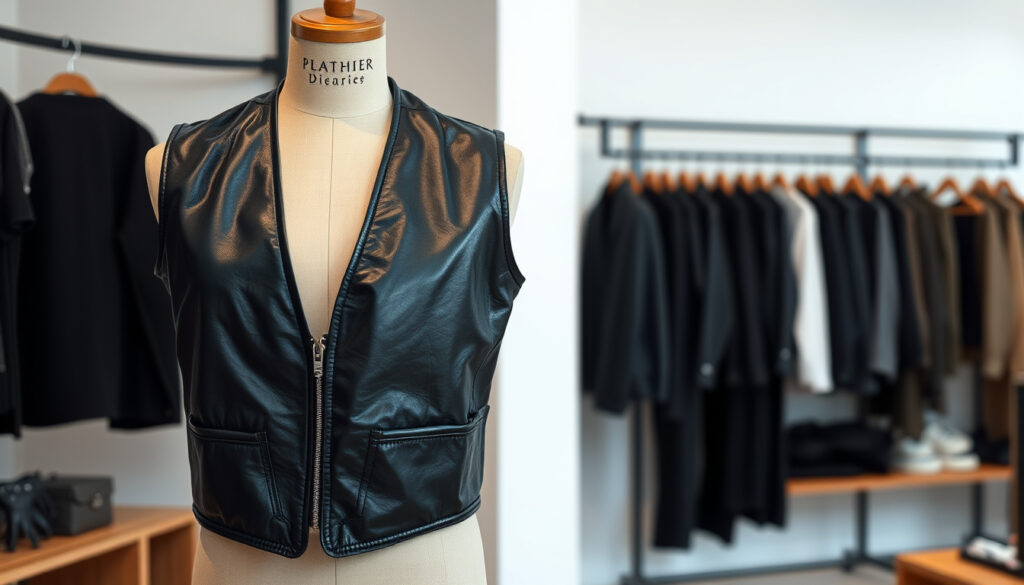
Pleather Vest Meaning: Definition, Slang & Origin
If you’ve stumbled across the term “pleather” while shopping for a jacket or seen it thrown around in fashion circles, you’re not alone. It sits somewhere between everyday clothing jargon and internet slang—and that split personality is exactly what makes it worth unpacking. By the time you’re done here, you’ll know exactly what pleather means, where it came from, and why the same word can mean two very different things depending on who’s using it.
Definition: Plastic imitation leather ·
Origin: Blend of “plastic” + “leather” (1980–1985) ·
Synonyms: Faux leather, vegan leather ·
Common use: Jackets, vests, upholstery
Quick snapshot
- Imitation leather made of plastic (Dictionary.com)
- Portmanteau of “plastic” + “leather” (Merriam-Webster)
- US pronunciation: /ˈpleð.ɚ/ (Cambridge Dictionary)
- No verified timeline for Urban Dictionary pleather slang entry date (Urban Dictionary)
- Exact invention date of term (only 1980–1985 range known) (Dictionary.com)
- Global regional variations beyond US Southeast (Urban Dictionary)
- First recorded 1980–1985 as plastic + leather blend (Dictionary.com)
- Mainstream dictionary entries established pre-2023 (Dictionary.com)
- Pleather vests continue as affordable vegan fashion staple (Merriam-Webster)
- Slanguage usage persists in niche online communities (Urban Dictionary)
| Label | Value |
|---|---|
| Material Type | Plastic-based synthetic |
| Word Origin | Plastic + leather (portmanteau) |
| Primary Synonyms | Faux leather, vegan leather |
| First Recorded | 1980–1985 |
| Key Definition Source | Cambridge Dictionary, Dictionary.com, Merriam-Webster |
| US Pronunciation | /ˈpleð.ɚ/ |
What does pleather mean?
In its most widely accepted form, pleather refers to an artificial material made to look like leather. According to Cambridge Dictionary, it’s “an artificial material made to look like leather,” with pleather seats and pleather jackets serving as common examples. Merriam-Webster defines it as “a plastic fabric made to look like leather,” while Dictionary.com specifies it as “imitation leather made of plastic, often used attributively.” The material typically consists of a fabric base coated with polyurethane or similar plastics, creating that leather-like appearance without animal products.
The key distinction is that pleather is a plastic imitation—not animal hide. This places it squarely in the synthetic leather category alongside faux leather and vegan leather. Dictionary entries across major references agree on this core definition, which is why you’ll see pleather used interchangeably with these terms in product descriptions, fashion writing, and everyday conversation.
Core definition from dictionaries
The three major dictionaries converge on pleather’s meaning: it’s artificial leather, typically plastic-based. Cambridge Dictionary even provides usage examples like “pleather seats,” showing how the word functions attributively—modifying another noun. Dictionary.com notes it can be used as both a noun and an adjective, making “pleather vest” grammatically parallel to “leather vest.”
Difference from real leather
Real leather comes from animal hides—typically cowhide—and undergoes tanning processes that create its distinctive durability and texture. Pleather, by contrast, uses plastics (usually polyurethane) layered over fabric backing. The practical difference is significant: real leather breathes better, develops patina over time, and costs considerably more. Pleather offers an affordable alternative, though it tends to crack or peel after extended wear.
When a product is labeled “pleather,” it’s signaling: this isn’t the genuine article. For buyers who want the leather aesthetic without the price tag or ethical concerns, pleather fills that gap—and it does so using exactly the materials the name promises.
Why do they call it pleather?
The name is a classic portmanteau—combining “plastic” and “leather” into a single word that telegraphs both the material’s look and its synthetic nature. Dictionary.com traces the origin to the 1980–1985 period, making it a product of the synthetics boom when petroleum-based materials were being developed across countless industries. The blending of familiar words made sense: rather than saying “plastic leather” each time, pleather became shorthand that immediately conveyed what you were getting.
This naming convention isn’t unique to pleather—think of spandex (elastic + nylon) or rayon (rayon, a semi-synthetic fiber). Portmanteaus were especially popular in fashion and materials during this era, often creating memorable trade names that stuck in everyday vocabulary.
Portmanteau explanation
The “pleather” portmanteau works because both component words remain recognizable within it. “Plas-” from plastic and “-ather” from leather blend smoothly, creating a term that’s pronounceable and memorable. Unlike some portmanteaus that obscure their origins (like “brunch” from breakfast + lunch), pleather’s hybrid nature stays transparent—you can still hear both words within it.
The naming itself tells us something about consumer expectations. Pleather was coined to be honest about what it is: not “imitation leather” or “fake leather” (terms that can sound deceptive) but explicitly “plastic leather”—a new material with its own identity, not a counterfeit of something else.
What is the slang for fake leather?
Here’s where things get interesting. While dictionaries consistently define pleather as the plastic-based material, Urban Dictionary documents a separate slang meaning: a lesbian who wears a pleather jacket and attempts to look like Missy Elliott. This usage appears to be community-generated rather than dictionary-sanctioned, reflecting the kind of informal, sometimes stereotyping language that emerges in online subcultures.
According to Urban Dictionary entries, “pleather” in this sense describes a specific fashion choice within lesbian culture—the leather or faux-leather jacket as a style statement. The Missy Elliott reference ties to early-2000s pop imagery that influenced various fashion subcultures.
Pleather as slang term
The slang usage diverges significantly from the dictionary definition. Where the material definition is neutral and descriptive, the Urban Dictionary meaning carries social connotations tied to identity and fashion subculture. This isn’t unusual for slang—words take on new meanings within specific communities—but it’s worth noting that this secondary meaning comes from user-generated content rather than authoritative sources.
Urban Dictionary context
Urban Dictionary entries also reference “pleathe” (a vegan dominant in the gay leather scene) and “plether” (Southeastern US slang for “a bunch of something”). These variations show how slang mutates as it spreads through different communities and regions—a natural linguistic process, though it creates distance from the original material-focused definition.
No direct Urban Dictionary entry exists specifically for “pleather vest”—the jacket references are the closest parallel. If you’re searching for pleather vest slang specifically, you won’t find a dedicated entry; the garment follows the material definition rather than carrying unique slang.
What does pleather stand for?
Pleather stands for the portmanteau itself: P-L-E-A-T-H-E-R breaks down as “plastic leather”—though notably, the “c” from “plastic” drops in favor of the smoother “plea-” sound. The spelling solidified as the term entered print, with no official acronym or hidden meaning beyond the obvious wordplay.
Some fashion historians and linguists have noted that this portmanteau style (dropping letters for phonetic flow) was common in 1980s material naming, possibly to make synthetic products sound more appealing than “pure plastic” might suggest.
Letter breakdown
P-L-E-A-T-H-E-R maps cleanly to the original compound: Plastic + leather, with the spelling adapted for pronunciation. There’s no acronym meaning—no “P” standing for a separate word. It’s simply an English portmanteau following standard conventions.
Historical usage
Dictionary.com confirms the term was first recorded between 1980 and 1985, placing it squarely in the post-punk and early hip-hop era when fashion was experimenting heavily with synthetic materials. This timing explains both the naming convention and the cultural contexts where pleather later appeared.
“Imitation leather made of plastic (often used attributively).” — Dictionary.com
“A plastic fabric made to look like leather.” — Merriam-Webster
“An artificial material made to look like leather: pleather seats.” — Cambridge Dictionary
What is another name for pleather vest?
The most common synonyms are “faux leather vest” and “vegan leather vest.” These terms appear interchangeably in fashion retail, though each carries slightly different connotations: “faux” emphasizes imitation, while “vegan” highlights the animal-free aspect. All three refer to the same polyurethane-based material.
Faux leather vest
“Faux leather” is perhaps the most widely used alternative in retail. The French-derived “faux” (meaning “false” or “imitation”) signals upfront that this isn’t genuine leather. In the context of a vest, “faux leather vest” communicates exactly the same product as “pleather vest”—same material, different marketing angle.
Vegan leather vest
“Vegan leather” has gained traction as consumer interest in animal-free products has grown. The term emphasizes the ethical dimension—avoiding animal products—making it popular among conscious consumers. Some manufacturers now use plant-based coatings (pineapple fiber, mushroom leather) and still label these “vegan leather,” expanding the term beyond pure plastics.
For buyers weighing options, the terminology choice reflects priorities: faux leather prioritizes honest description, while vegan leather emphasizes ethical positioning in a crowded marketplace.
Related reading: country trucker caps origin
Frequently asked questions
What is pleather made of?
Pleather is typically made from a fabric base (often polyester or cotton) coated with polyurethane (PU) or polyvinyl chloride (PVC). The plastic layer is embossed with a leather-like texture and sometimes dyed to mimic leather’s color variations.
Is pleather durable?
Pleather is moderately durable but less so than genuine leather. With proper care, a pleather vest can last several years, but the material is prone to peeling or cracking, especially in areas of frequent flexing. Exposure to extreme heat or sunlight accelerates deterioration.
How to care for pleather vests?
Clean pleather with a damp cloth and mild soap—avoid soaking. Store away from direct sunlight and heat sources. Use leather conditioners sparingly, and never apply products designed for real leather without checking compatibility, as they may contain animal fats or interact unpredictably with the synthetic surface.
What is the origin of pleather?
Pleather originated as a portmanteau of “plastic” + “leather” and was first recorded between 1980 and 1985. The term emerged during the synthetics boom when manufacturers were developing plastic alternatives to traditional materials across many industries.
Is pleather vegan?
Yes, in the sense that it contains no animal products—the defining characteristic that earns it the “vegan leather” label. However, some vegans object to pleather because it’s petroleum-based and not biodegradable, making it an imperfect ethical choice depending on your priorities.
What is pleather vest in Urban Dictionary?
Urban Dictionary doesn’t have a dedicated entry for “pleather vest” specifically. The closest references are pleather jacket entries within lesbian slang, describing a fashion choice. The standard meaning of pleather vest simply refers to a vest made of pleather (plastic imitation leather) material.
Who wears pleather vests?
Pleather vests appear across various subcultures—punk, goth, alternative fashion, and everyday consumers seeking the leather look without leather prices. Fashion-forward buyers in their 20s–40s comprise the largest demographic, with particular popularity in urban retail markets and online vintage resellers.
The pleather vest meaning ultimately comes down to materials: a plastic-based jacket that mimics leather’s look without the animal products or premium price. Whether you’re shopping for one or just encountered the term, now you know exactly what’s being sold—and what was coined in the 1980s to make that synthetic promise sound less like a compromise.
More related posts
 Sailor Moon LGBTQ Themes and Where to Watch in 2025
 Chicken Treat Menu with Prices: WA Specials & Locations
 Trend Micro Login: Account Access, Install & Management
 Steve Carell: Nice Guy, Wife, Career & LGBTQ Stance
 ABC Just In – Federal Judge Delays Buyout Deadline
 Connor Swindells: Biography, Barbie Role, Wife, and Relationships
 Hooligan Hefs: Real Name, Songs, Net Worth, and Tour Info