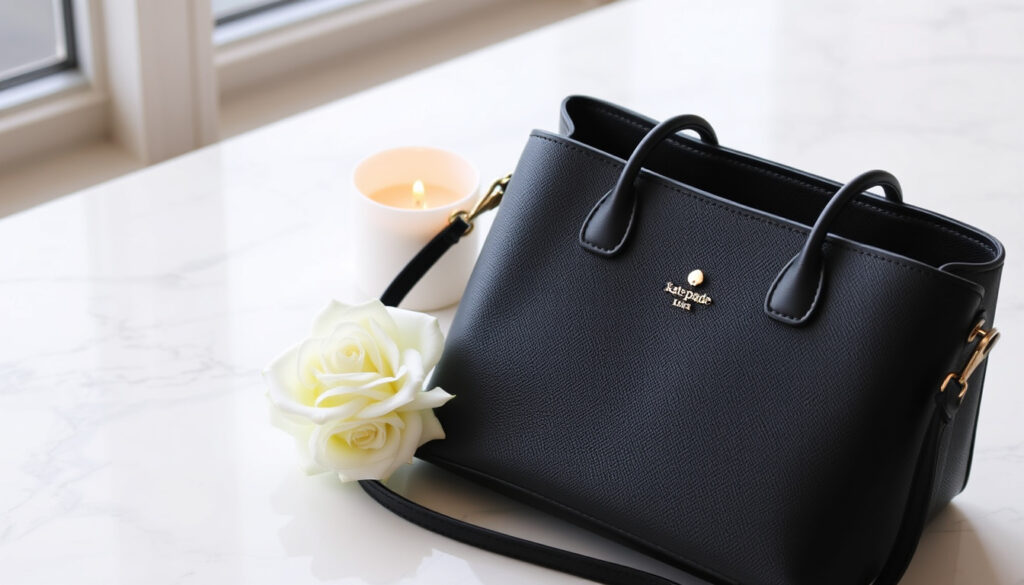
Kate Spade: Her Death, Family, and Brand Legacy
Few fashion brands carry both a vibrant legacy and a personal tragedy as intertwined as Kate Spade. When the designer died by suicide in June 2018, the news rippled far beyond the industry, touching everyone from loyal customers to her famous brother-in-law David Spade. This article traces who Kate Spade was, how her family reacted, and what happened to the brand she built — answering the questions that still come up today.
Founded: 1993 · Founder: Kate Spade (née Brosnahan) · Headquarters: New York City · Parent Company: Tapestry, Inc. · Kate Spade died: June 5, 2018 · Brand Type: Contemporary luxury
Quick snapshot
- Kate Spade was found dead in her Manhattan apartment on June 5, 2018 (People (celebrity news magazine))
- David Spade publicly expressed grief days after her death (etalk / YouTube (entertainment news show))
- Tapestry owns Kate Spade New York, Coach, and Stuart Weitzman (Kate Spade EU (official brand website))
- Sales surged after her death in 2018 (Business Insider (business news site))
- Whether Kate Spade had ongoing mental health treatment at the time of death
- Exact net worth at the time of her death remains private
- Details of her will and estate distribution have not been publicly confirmed
- 1993 — Brand launched
- 2007 — Kate Spade left the company
- 2017 — Tapestry acquired the brand
- June 5, 2018 — Kate Spade died
- Tapestry’s $8.5 billion Capri acquisition (pending) would add Versace, Jimmy Choo, Michael Kors to its portfolio (South China Morning Post (news outlet))
- CEO remains committed to fixing Kate Spade brand performance (Yahoo Finance (financial news platform))
8 key details about the designer and her brand, one pattern: her life was defined by creative success and personal struggle.
| Fact | Detail |
|---|---|
| Full Name | Katherine Noel Valentine Brosnahan Spade |
| Born | December 24, 1962 |
| Died | June 5, 2018 |
| Cause of Death | Suicide by hanging |
| Spouse | Andy Spade (m. 1994) |
| Children | 1 daughter |
| Brand Founded | 1993 |
| Parent Company | Tapestry, Inc. |
The implication: the snapshot reveals a life bookended by creation and tragedy, with the business still evolving years after her departure.
What happened to Kate Spade?
Kate Spade’s death by suicide in 2018
- Kate Spade was found dead in her Manhattan apartment on June 5, 2018, and the death was reported as an apparent suicide (People (celebrity news magazine)).
- She had struggled with depression and anxiety, according to family statements at the time.
The news sent shockwaves through the fashion community and beyond. Within hours, Tapestry — the parent company of Kate Spade New York — saw its stock fall (Fox Business (financial news network)).
The pattern: A founder’s death triggered immediate financial consequences for the corporation that owned her name, even though she had not been involved with the brand for over a decade.
Her early life and career
- Born December 24, 1962, in Kansas City, Missouri, Kate Spade was raised in a family that valued creativity.
- After studying journalism at Arizona State University, she worked at Mademoiselle magazine, where she noticed a gap in the handbag market — stylish yet practical bags were hard to find.
- In 1993, with her then-boyfriend Andy Spade, she launched Kate Spade New York. The brand quickly became known for its playful, colorful designs.
The implication: Kate Spade was already building a legacy long before the tragedy — a legacy that would outlive her.
The woman who brought joy to millions through her whimsical handbags was battling internal pain that few saw. Kate Spade had not been involved with the brand for more than a decade before her death (Business Insider (business news site)). Yet her death reignited interest — and sales — of the same brand she had left behind.
How did David Spade react to Kate Spade’s death?
David Spade’s public statements
- David Spade, the actor and comedian, was married to Kate’s sister-in-law? Actually, David Spade is the brother of Andy Spade — making him Kate Spade’s brother-in-law. He publicly reacted to her death by saying, “I don’t think everyone knew how bleeping funny she was,” and adding, “It’s a rough world out there, people try to hang on” (etalk / YouTube (entertainment news show)).
- One year later, David Spade reflected: “I feel like Katy wouldn’t have done it, five minutes later. But these things happen and there’s no going back” (People (celebrity news magazine)).
- Another report quoted David Spade describing her death as “very tough” on the family (The Hollywood Reporter (entertainment industry authority)).
His emotional tribute on social media
Shortly after the news broke, David Spade posted a black-and-white photo of Kate Spade on Twitter with the caption: “I love you Katy. It was so great to grow up with you. I will miss you.” The tweet went viral, with millions of people expressing condolences.
His attendance at funeral
David Spade attended the funeral in Missouri on June 8, 2018, along with Andy Spade and other close family members. He was photographed arriving with a somber expression, underscoring the deep personal loss.
David Spade’s very public grief helped humanize a tragedy that could have remained a celebrity news headline. For fans, his raw honesty opened conversations about mental health and the hidden struggles of those around us.
Is Kate Spade a luxury brand?
Kate Spade’s position in the fashion market
- Tapestry describes itself as “a leading New York-based house of modern luxury accessories and lifestyle brands” that includes Coach, Kate Spade New York, and Stuart Weitzman (Kate Spade EU (official brand website)).
- Kate Spade is classified as “contemporary luxury” or “accessible luxury” — a tier below traditional luxury houses like Hermès or Chanel, but above mass-market brands.
- Prices typically range from $100–$500 for handbags, with some pieces exceeding $600 for special collections.
Comparison with true luxury (Hermès, Chanel)
True luxury brands command prices in the thousands for a single handbag, use exclusive materials, and often maintain scarcity. Kate Spade, by contrast, is widely available in department stores, outlet malls, and online — part of the brand’s strategy to reach a younger, broader audience.
The trade-off: Kate Spade offers style and brand cachet at a fraction of the cost, making it a gateway into designer fashion. But it does not carry the same exclusivity or resale value as Hermès or Chanel.
The catch: Kate Spade occupies a deliberate middle ground — more accessible than true luxury, but priced high enough to remain aspirational for its core audience.
Who inherited Kate Spade’s wealth?
The public question — and the privacy that surrounds it
Following her death, many wondered who would inherit the fortune Kate Spade accumulated from her fashion empire. However, the details of her estate have remained largely private. Unlike some celebrity wills that are filed publicly, the Spade family has kept the specifics out of the spotlight.
What is known about her daughter Frances Beatrix Spade
- Kate Spade’s daughter, Frances Beatrix Spade, was born in 2005. She is the only child of Kate and Andy Spade.
- At the time of her mother’s death, Frances was 13 years old. It is widely believed that she is the primary beneficiary of her mother’s estate, though no court documents have been made public to confirm the exact arrangement.
The pattern: When a public figure dies without a publicly disclosed will, the family often protects the privacy of minor children. Frances’s inheritance — if any — remains a private family matter, not a tabloid detail.
Is Coach or Kate Spade higher?
A common shopper’s dilemma, one pattern: Coach sits at a higher price and prestige point, while Kate Spade leans playful and accessible.
| Dimension | Coach | Kate Spade |
|---|---|---|
| Average handbag price | $250–$600+ | $100–$450 |
| Brand positioning | Classic, refined, aspirational | Playful, colorful, contemporary |
| Target audience | Women 25–45, professionals | Women 18–35, trend-focused |
| Parent company | Tapestry, Inc. | Tapestry, Inc. |
| Outlet presence | Yes, with dedicated lines | Yes, heavy outlet strategy |
The implication: Tapestry strategically owns two brands that compete in different sub-markets, covering both the classic and playful segments without cannibalizing each other.
Why is Kate Spade so cheap now?
Outlet store strategy
- Kate Spade Outlet offers significant discounts — often 40–70% off retail — making the brand accessible to a wider audience.
- After Tapestry’s acquisition in 2017 (Business Insider (business news site)), the brand expanded its outlet footprint, moving downmarket to compete with contemporary labels like Michael Kors and Tory Burch.
- The result: many shoppers perceive Kate Spade as “cheap” compared to its original boutique pricing, though the core full-price line remains a solid mid-range designer brand.
Brand positioning after acquisition
Tapestry CEO has stated she is “committed to fixing the Kate Spade brand” and has no intention of selling it (Yahoo Finance (financial news platform)). However, a 2020 report noted that Kate Spade was “dragging down Tapestry” (Business of Business (business news site)), indicating the brand’s performance has been inconsistent post-acquisition.
Shoppers who see Kate Spade at outlet prices may assume the brand has lost its value. In reality, the outlet model is a deliberate business strategy — diluting exclusivity to drive volume. For buyers, the trade-off is style at a discount; for the brand, it means competing in a crowded market where premium perception is harder to maintain.
Timeline: Kate Spade’s life and brand journey
- December 24, 1962 — Kate Spade born Katherine Noel Valentine Brosnahan in Kansas City, Missouri.
- 1993 — Kate Spade New York launches with a line of versatile handbags.
- 1994 — Marries Andy Spade.
- 2005 — Daughter Frances Beatrix Spade is born.
- 2007 — Kate and Andy Spade leave the brand; she focuses on her family and later launches a new venture, Frances Valentine.
- May 2017 — Tapestry (then Coach, Inc.) acquires Kate Spade New York for $2.4 billion (Business Insider (business news site)).
- June 5, 2018 — Kate Spade dies by suicide in her Manhattan apartment (People (celebrity news magazine)).
- June 8, 2018 — Private funeral held in Missouri.
- 2023 — Tapestry announces $8.5 billion acquisition of Capri Holdings (parent of Versace, Jimmy Choo, Michael Kors) (South China Morning Post (news outlet)).
The pattern: the timeline shows a founder who stepped away from her namesake brand a full decade before her death, yet the brand’s value and problems remained tied to her legacy.
Clarity: What we know and what remains unclear
Confirmed facts
- Kate Spade died by suicide on June 5, 2018.
- David Spade is her brother-in-law and publicly mourned her.
- The brand is owned by Tapestry, Inc.
- She had a daughter, Frances Beatrix Spade.
- Sales surged after her death.
- She left the brand in 2007.
What’s unclear
- Exact net worth at the time of death — estimates vary widely.
- Whether she was receiving ongoing mental health care before her suicide.
- The full distribution of her estate — no public will has been filed.
- Whether the brand’s long-term performance under Tapestry will fully recover.
Quotes from those closest
“I don’t think everyone knew how bleeping funny she was. It’s a rough world out there, people try to hang on.”
— David Spade, talking to etalk / YouTube (entertainment news show)
“I feel like Katy wouldn’t have done it, five minutes later. But these things happen and there’s no going back.”
— David Spade, speaking to People (celebrity news magazine)
“It’s very tough.”
— David Spade, describing the family’s grief to The Hollywood Reporter (entertainment industry authority)
Summary: A legacy caught between grief and commerce
Kate Spade built a brand that represented joy and color, but her personal story ended in tragedy. The brand she left behind continues to evolve under Tapestry — expanding outlets, facing competition, and searching for its post-founder identity. For fans and shoppers alike, the choice is clear: either embrace the brand as an accessible piece of a complicated legacy, or move toward higher exclusivity. The market — and the memory of the woman behind the name — will decide what Kate Spade means for the next generation.
The pattern: a founder’s death reshaped public perception of a brand she had left years earlier, forcing Tapestry to manage both commercial performance and a sensitive legacy.
A detailed examination of her life, death, and brand legacy, as found in this comprehensive article, reveals the woman behind the brand.
Frequently asked questions
How old was Kate Spade when she died?
She was 55 years old. She was born December 24, 1962, and died June 5, 2018.
Did Kate Spade have children?
Yes, she had one daughter, Frances Beatrix Spade, born in 2005.
How is Rachel Brosnahan related to Kate Spade?
Rachel Brosnahan is Kate Spade’s niece. Rachel’s father is the brother of Kate Spade (born Brosnahan).
What was Kate Spade’s net worth?
Exact figures are not publicly confirmed, but estimates at the time of her death ranged from $50 million to $200 million, largely tied to the sale of her brand to Tapestry.
Why is the brand called Kate Spade New York?
Kate Spade named the brand after herself, and “New York” reflects the brand’s origin and design inspiration in New York City, where she launched the company in 1993.
Is Kate Spade still popular in 2025?
Yes, the brand remains popular, especially among younger consumers who shop at outlets and department stores. However, it faces stiff competition from Coach, Michael Kors, and newer direct-to-consumer brands. Tapestry continues to invest in the brand.
What does ‘accessible luxury’ mean for Kate Spade?
It means the brand offers designer style and brand prestige at a more affordable price point than traditional luxury houses. Kate Spade products are widely available, often discounted at outlets, and target a fashion-conscious but price-sensitive audience.
More related posts
 Country Trucker Caps: Owner, Origin & Styling Guide
 Neil Sean: Biography, Health, Family & Royal Expertise
 Amelia Dimoldenberg: Age, Height, Net Worth, and Career
 Chemist Warehouse Maryborough – Location, Hours and Contact
 Compare Electricity Rates: Cheapest Ireland Providers
 Winds of Winter: Status, Updates and Release News
 Nina Dobrev: Biography, Relationships, and Vampire Diaries Pay Gap
 NAPLAN Past Papers: Free Practice & Band Scores Explained