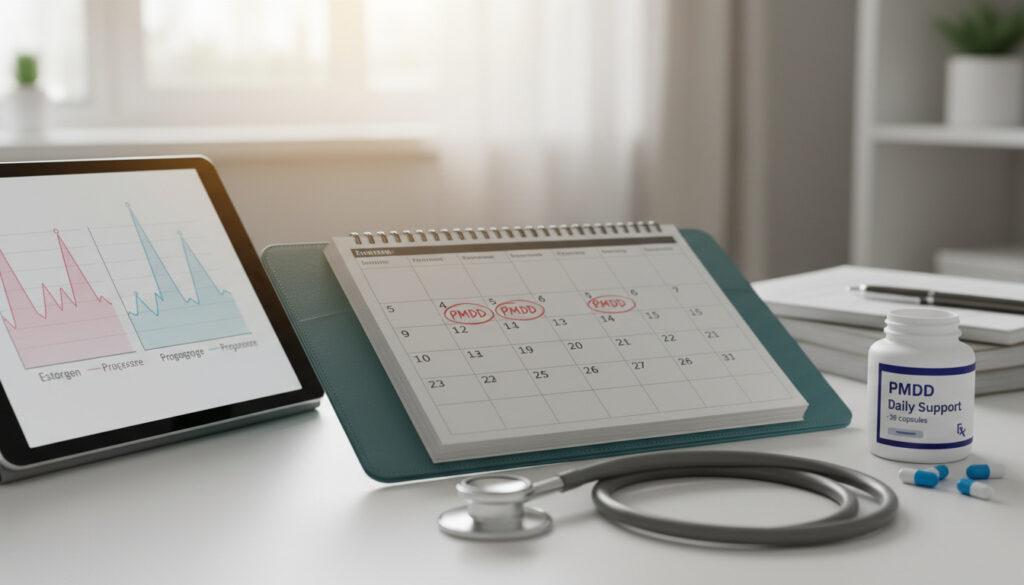
What Is PMDD – Symptoms, Causes, Diagnosis, Treatment
Premenstrual dysphoric disorder (PMDD) is a severe mood disorder that causes debilitating symptoms in the week or two before menstruation begins. Unlike mild premenstrual syndrome (PMS), PMDD significantly interferes with daily functioning and relationships, establishing itself as a recognized psychiatric condition rather than a variant of normal menstruation.
The condition was officially designated as a disorder in the DSM-5, validating the experiences of millions of women who previously struggled to have their symptoms taken seriously. While up to 80 percent of women experience physical changes with menstruation and 20 to 40 percent experience PMS symptoms, only 2 to 10 percent of women report severe disruption consistent with PMDD.
This prevalence makes PMDD a clinically important condition affecting millions worldwide, yet it remains frequently misunderstood or dismissed as “just PMS.” Understanding the distinct nature of this disorder is essential for proper diagnosis and effective treatment.
What Are the Symptoms of PMDD?
| Definition | Prevalence | Key Difference from PMS | Main Impact |
|---|---|---|---|
| Severe PMS form with mood disruption | 2–10% of reproductive-age women | 5+ symptoms including mood changes vs. mild physical symptoms | Disrupts work, school, and daily life |
- Recognized as a distinct psychiatric disorder in DSM-5 since 2013
- Symptoms specifically linked to luteal phase serotonin sensitivity
- Represents a biological condition, not a psychological weakness
- Lifestyle modifications may aid symptom relief alongside medical treatment
- Requires prospective symptom tracking for accurate diagnosis
- Symptoms resolve within two to three days after menstruation begins
- Specialist consultation is recommended when symptoms interfere with functioning
| Fact | Details |
|---|---|
| Full Name | Premenstrual Dysphoric Disorder |
| DSM Status | DSM-5 recognized (2013) |
| Prevalence | 2–10% of menstruating women |
| Duration | Luteal phase, 1–2 weeks pre-period |
| Severity | Interferes significantly with daily functioning |
| Symptom Count | Five or more required for diagnosis |
| Onset | Typically emerges after ovulation |
| Resolution | Within 2–3 days after menstruation begins |
| Mood Requirement | At least one mood-related symptom necessary |
| Confirmation | Daily tracking for two consecutive cycles required |
PMDD symptoms typically emerge after ovulation and resolve within two to three days after menstruation begins, creating a distinct cyclical pattern. The disorder presents both cognitive-affective and physical symptoms, ranging from severe irritability and mood swings to physical discomfort.
Mood and cognitive symptoms include severe irritability, anger, depression, anxiety, panic attacks, loss of interest in activities, difficulty concentrating, and in severe cases, suicidal ideation. Physical manifestations encompass bloating, breast tenderness, joint pain, headaches, fatigue, food cravings, and sleep disturbances.
What Causes PMDD?
Hormonal Factors
Female gonadal hormones—estrogen and progesterone—play a causative role in PMDD, likely through their effects on brain neurotransmitter systems. Brain areas that regulate emotion and behavior are studded with receptors for estrogen, progesterone, and other sex hormones, affecting neurotransmitter systems that influence mood and thinking.
Serotonin Dysfunction
Women with PMDD exhibit specific serotonin abnormalities, particularly during the late luteal phase when estrogen levels decline. Research shows that ovarian steroids alter expression of serotonin transporter genes and other serotonergic mechanisms. Women with PMDD demonstrate deficiencies in whole blood serotonin, blunted serotonin production in response to tryptophan challenges, and worsened symptoms during tryptophan depletion.
Neurosteroids may be key contributors to PMDD’s etiology, representing a potential avenue for drug development. Suboptimal luteal phase GABA_A receptor sensitivity to neuroactive steroids represents one potential pathogenic mechanism.
Genetic Vulnerability
Genetic vulnerability likely contributes to PMDD susceptibility, though it remains unclear why some women are more sensitive than others. Risk factors include stress, being overweight or obese, and a personal history of trauma or sexual abuse.
What Is the Difference Between PMS and PMDD?
The key distinction between PMDD and PMS lies in severity and functional impairment. While PMS causes annoying but non-disabling symptoms, PMDD causes symptoms severe enough to interfere significantly with work, school, relationships, and daily activities.
PMDD represents the severe end of the premenstrual symptom spectrum rather than a separate condition entirely. The cyclicity, severity, and specific relationship to menstrual cycle phases distinguish PMDD from normal premenstrual changes.
How Is PMDD Diagnosed?
Diagnosis requires five or more symptoms (at least one mood-related) present for most menstrual cycles over the past year, causing noticeable disruption to daily functioning. A critical diagnostic feature is that symptoms must be limited to the luteal phase with a symptom-free period during the follicular phase.
The diagnosis must be confirmed prospectively through daily symptom rating for at least two consecutive menstrual cycles. Healthcare providers typically ask patients to keep a symptom diary to track patterns. Additionally, other conditions causing similar symptoms—including depression, dysthymia, anxiety, and hypothyroidism—must be ruled out.
Symptoms must be limited to the luteal phase (the second half of the menstrual cycle) with complete resolution during the follicular phase. This distinction is essential for differentiating PMDD from preexisting depression or anxiety disorders.
How Is PMDD Treated?
Selective serotonin reuptake inhibitors (SSRIs) represent the most effective pharmacological treatment for PMDD. Up to 75 percent of women report relief of symptoms when treated with SSRI medications, with side effects occurring in up to 15 percent of women, including nausea, anxiety, and headaches.
SSRIs can be prescribed continuously throughout the menstrual cycle or as symptom-onset therapy taken only during the luteal phase. Relatively low SSRI doses effectively reduce symptoms, likely due to SSRIs’ selective brain steroidogenic stimulant properties.
Eliminating the effect of ovarian gonadal hormones through gonadotropin-releasing hormone (GnRH) agonists relieves PMDD symptoms, with subsequent hormone administration causing symptoms to return in women with the disorder. For those seeking more information on PMDD, Slinda p-piller erfarenheter offers valuable insights.
When Did PMDD Become a Recognized Disorder?
- : Early medical literature documents severe mood symptoms associated with the menstrual cycle, though without specific diagnostic criteria.
- : The term “premenstrual dysphoric disorder” is coined to describe severe premenstrual symptoms distinct from PMS.
- : PMDD is included in the DSM-IV appendix as a provisional disorder requiring further research.
- : PMDD is designated as an official psychiatric disorder in the DSM-5, establishing it as a legitimate medical and mental health condition.
What Do We Know for Certain About PMDD?
| Established Facts | Uncertain Areas |
|---|---|
| Recognized psychiatric disorder in DSM-5 | Exact hormonal mechanism triggering symptoms |
| Symptoms strictly track the menstrual cycle (luteal phase) | Full role of genetic factors in susceptibility |
| SSRIs provide effective treatment for 75% of patients | Long-term prognosis variability across individuals |
| Affects 2–10% of menstruating women | Relationship to pregnancy and menopause transitions |
| Involves measurable serotonin abnormalities | Whether the condition is “curable” versus manageable |
Why Does PMDD Remain Underrecognized?
Accessing comprehensive healthcare resources, including government health portals like My Gov Account – Create Login Manage Troubleshoot, represents one administrative step in managing chronic conditions, though specific diagnosis requires specialized medical consultation.
PMDD is now recognized as a severe and chronic health condition that needs attention and treatment. However, cultural stigma around menstruation and mental health often leads to misdiagnosis as bipolar disorder or major depression. The condition’s cyclical nature sometimes causes healthcare providers to dismiss symptoms until careful tracking reveals the pattern.
Narratives exploring human resilience and medical understanding, similar to those discussed in The Magic of Ordinary Days – Plot, Themes and Film Guide, highlight the importance of recognizing legitimate health conditions that were historically minimized. The evidence base demonstrates that PMDD involves measurable biological abnormalities rather than representing normal menstrual variation.
What Do Medical Authorities Say?
PMDD is a severe mood disorder that causes debilitating symptoms in the week or two before menstruation begins, significantly interfering with daily functioning and relationships.
Office on Women’s Health, U.S. Department of Health and Human Services
Brain areas that regulate emotion and behavior are studded with receptors for estrogen, progesterone, and other sex hormones. These hormones affect neurotransmitter systems influencing mood and thinking, potentially triggering PMDD symptoms.
Harvard Women’s Health Watch
What Is the Bottom Line on PMDD?
PMDD represents a serious biological condition requiring medical intervention, distinguished from PMS by its severity and impact on daily functioning. With proper diagnosis through prospective symptom tracking and treatment options including SSRIs and hormonal therapies, women can achieve significant symptom relief. Accessing appropriate care through resources like My Gov Account – Create Login Manage Troubleshoot may facilitate insurance or appointment logistics, though clinical expertise remains essential for management.
Frequently Asked Questions
Is PMDD a real disorder?
Yes. PMDD is officially recognized as a psychiatric disorder in the DSM-5 and involves measurable biological abnormalities in serotonin and neurosteroid systems, not psychological weakness.
How common is PMDD?
PMDD affects approximately 2 to 10 percent of menstruating women, compared to 20 to 40 percent who experience milder PMS symptoms.
What should I do if I think I have PMDD?
Track your symptoms daily for at least two consecutive menstrual cycles, then consult a healthcare provider. They will rule out other conditions like depression or thyroid issues before confirming diagnosis.
Does PMDD get worse with age?
Current research has not established definitive age-related patterns for PMDD progression. Individual experiences vary, and you should consult a specialist regarding your specific symptoms.
Does PMDD go away after pregnancy?
Research regarding PMDD’s relationship to pregnancy and postpartum periods remains limited. Symptom patterns may change, but specific long-term outcomes require individual medical assessment.
Can PMDD be cured?
Whether PMDD is permanently curable remains uncertain based on current evidence. However, treatments including SSRIs provide effective symptom management for the majority of patients.
More related posts
 Helen McCrory: Career, Death, and Legacy of the Peaky Blinders Star
 Unfair Dismissal Claim Ireland: Grounds, Payouts, Process
 Roborock Saros 10R – Ultra-Slim Vacuum Specs Review
 Miss Moni: Biography, Age, Nationality & Toddler Learning Videos
 Theo James: Wife, Children, Height, and the Truth Behind the Rumors
 Jesse Arthars: Broncos Exit, Catalans Move & Career Profile
 Adria Arjona: Biography, Movies, Relationship, and Languages
 DJ Qualls: Biography, Career, and Personal Life