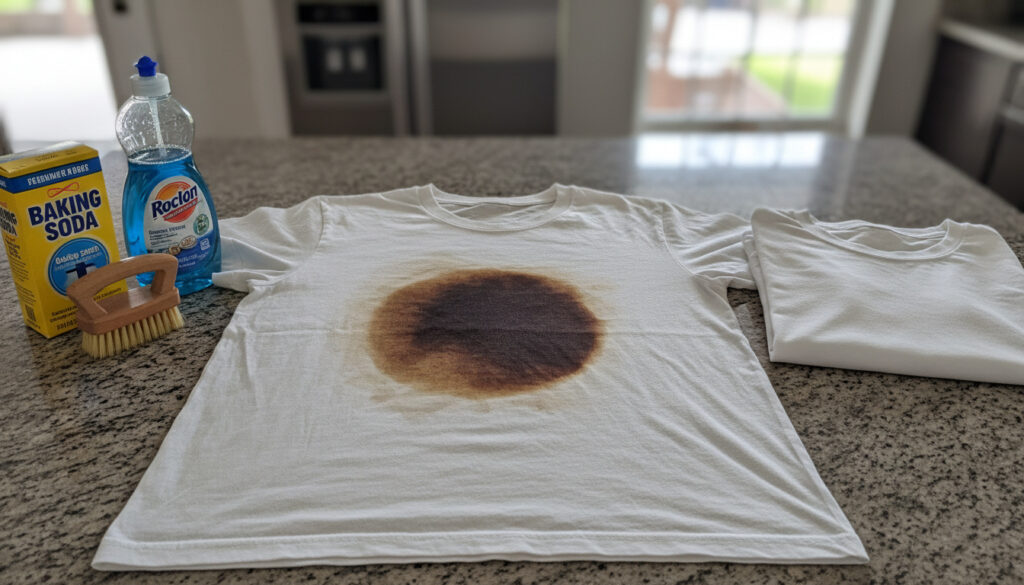
How to Get Oil Stains Out of Clothes – Proven Removal Methods
Oil and grease stains represent one of the most persistent challenges in fabric care, with sources ranging from motor oil and cooking splatter to food residue bonding rapidly to textile fibers. These hydrophobic marks resist standard aqueous washing because oil and water repel each other, requiring specific chemical or mechanical interventions to break the bond. Success depends largely on treating the stain before heat exposure sets the grease permanently into the material.
Fresh spills offer the highest recovery rates, often clearing completely with simple household surfactants applied within minutes of contact. Set-in stains, particularly those that have survived a wash and dry cycle, demand extended pretreatment windows and enzymatic solutions to dissolve the hardened lipid bonds. Fabric composition further complicates removal, as delicate proteins like silk and wool suffer damage from the alkaline agents that cotton and synthetic blends tolerate easily.
This analysis examines evidence-based methods for oil stain extraction across various fabric types and stain ages, detailing the chemical mechanisms behind dish soap emulsification, mechanical absorption via baking soda, and enzymatic fat breakdown. The guidance draws from textile care research and appliance manufacturer specifications to provide actionable protocols for both immediate response and salvage operations on previously laundered garments.
How Do You Get Oil Stains Out of Clothes?
Dish Soap Protocol
Fresh to set-in cooking grease
Baking Soda Absorption
Motor oil and heavy grease
Enzymatic Spray
Dried and washed-dried stains
Professional Care
Silk, wool, and delicates
Critical Factors for Success
- Blot excess oil immediately with paper towels to prevent spreading; never rub, which drives the stain deeper into yarn structure.
- Dish soap contains surfactants that emulsify oil molecules, breaking them into water-soluble particles that rinse away, according to textile chemistry guidelines from Red Kap.
- Machine heat permanently sets grease stains; always air-dry or line-dry garments after treatment until verifying complete removal.
- Baking soda operates through mechanical absorption rather than chemical reaction, drawing oil into its porous crystalline structure.
- Enzyme-based cleaners like OxiClean target the protein and fat bonds in organic stains, requiring up to one week of saturation for deep-set marks.
- Garment care labels dictate maximum water temperature; hot water effectively dissolves grease but may damage delicate fibers.
- Spot-test all treatments on inconspicuous seams to verify colorfastness and fabric integrity before full application.
For local retail options when purchasing supplies, check Shopping Center Near Me – Maps, Hours, Top Florida Malls.
Comparative Method Analysis
| Method | Optimal Stain Type | Pretreatment Duration | Mechanism of Action |
|---|---|---|---|
| Dish Soap | Cooking oil, general grease | 5–10 minutes | Surfactant emulsification |
| Baking Soda | Motor oil, fresh grease | 10 minutes to overnight | Mechanical absorption |
| Vinegar Solution | Post-absorption residue | Variable soak | Acetic acid dissolution |
| OxiClean Spray | Set-in, dried stains | 5 minutes to 1 week | Enzymatic fat breakdown |
| Aloe Vera Gel | Hot-soaked stains | Immediate scrub | Alternative surfactant |
| Salt | Fresh spills | Immediate application | Surface absorption |
Does WD-40 Remove Oil Stains from Clothes?
Despite persistent anecdotal recommendations, Maytag and other textile care sources explicitly advise against using WD-40 as a stain treatment. The product functions as a petroleum-based solvent and water displacer designed for metal lubrication, not fabric care. When applied to clothing, it frequently spreads the original oil stain across a wider surface area while introducing additional hydrocarbon residues that prove difficult to extract.
WD-40 acts as a solvent that may spread stains or damage delicate fabrics. Textile experts recommend sticking to soap-based surfactants and mechanical absorbents rather than petroleum solvents for grease removal.
Why WD-40 Is Not Recommended
WD-40’s formulation includes mineral oil and petroleum distillates that create a secondary staining issue. While it may temporarily break down grease, it leaves behind its own oily residue that requires harsh detergents to remove, potentially damaging sensitive fibers. The solvent can also degrade elastic components in synthetic blends and cause discoloration in dark fabrics. Tide’s stain removal guidelines emphasize that effective oil removal requires emulsification rather than displacement, which standard dish soaps provide without the complications of petroleum additives.
Cooking Oil Removal Without Harsh Solvents
For cooking oil specifically, lay the garment flat with a towel or cardboard barrier underneath to prevent bleed-through. Apply a small amount of dish soap directly to the stain and work it gently into the fibers with a soft cloth. Allow five to ten minutes of dwell time for the surfactants to penetrate the oil molecules, then rinse with warm water before machine washing in the hottest water safe for the fabric. Apartment Therapy notes that this method proves effective even on set-in cooking grease when combined with a thirty-minute warm water soak prior to washing.
How to Get Old Oil Stains Out of Clothes?
Set-in stains that have bonded deeply to fibers or survived previous washing attempts require extended pretreatment protocols. OxiClean recommends saturating dried stains with enzymatic spray and allowing dwell times ranging from five minutes to one week depending on severity. The enzymes require sustained contact to break the protein and fat bonds that have solidified within the yarn structure.
Old stains require significantly longer intervention than fresh spills. Sources indicate that while fresh stains may clear in minutes, set-in grease often needs overnight absorption plus extended soaking, with no method guaranteeing 100% success without professional intervention.
Treating Set-In Stains
For stains aged beyond twenty-four hours, create a baking soda paste by sprinkling generous amounts over the affected area placed atop an absorbent towel. Allow the powder to sit for ten minutes to overnight, monitoring for color change as the porous structure pulls oil from the fibers. Scrape away the saturated powder and repeat if necessary. For enhanced efficacy, follow the baking soda treatment with a vinegar-water spray; the resulting chemical reaction produces carbon dioxide that helps dislodge remaining particles. This combination proves particularly effective on motor oil and heavy lubricants that have begun to oxidize.
Recovering Washed-and-Dried Stains
Heat from machine drying permanently alters the chemical structure of grease, making these stains the most challenging to remove. Recovery requires reapplication of pretreatment methods followed by extended soaking periods of thirty minutes to six hours. Video demonstrations confirm success on previously dried stains using multiple treatment cycles with dish soap soaks. Always air-dry these garments and inspect carefully before attempting another machine dry, as repeated heat exposure will progressively set the stain deeper.
What Removes Oil Stains from Specific Fabrics?
Fabric composition dictates both treatment selection and water temperature tolerance. Natural cellulose fibers like cotton withstand alkaline agents and hot water, while protein-based fibers like silk and wool require acidic or neutral pH solutions and cold water to prevent denaturing and shrinkage.
Always test stain removal methods on an inconspicuous area first. Different dyes and fiber treatments react unpredictably to alkaline agents like baking soda or acidic solutions like vinegar.
Cotton and Denim
Cotton, colored fabrics, and denim tolerate the full spectrum of household methods including dish soap, baking soda with vinegar, and enzymatic cleaners. These materials can withstand hot or warm water cycles if the garment care label permits. When treating jeans, limit enzymatic spray contact to five minutes initially to check for color loss, and always air-dry to prevent shrinkage and preserve the fabric’s dimensional stability.
Delicates and Synthetics
Silk, wool, and delicate synthetics require restricted protocols. Blot these fabrics gently with diluted dish soap only, using cold water exclusively. Never apply baking soda to wool, as the alkaline pH can cause felting and permanent texture damage. Avoid soaking these garments entirely; instead, spot-treat and seek professional dry cleaning for valuable items. Synthetic blends may tolerate slightly more aggressive treatment than natural delicates, but hot water risks melting or deforming artificial fibers.
What Is the Optimal Timeline for Stain Treatment?
- 0–5 Minutes: Blot excess oil immediately with absorbent paper to prevent capillary action from spreading the stain across the fabric surface.
- 5–30 Minutes: Apply pretreatment agents (dish soap for fresh stains, baking soda for heavy grease) and allow chemical or mechanical action to begin.
- 30 Minutes to 6 Hours: Wash in the warmest safe water for fresh stains; for old stains, initiate extended soaking periods or overnight absorption.
- Set-In or Dried Stains: Repeat treatment cycles, allowing enzymatic sprays up to one week of contact time, with air-drying verification between attempts.
What Methods Are Verified Versus Uncertain?
Established Techniques
- Dish soap surfactants emulsify oil molecules for water rinsing
- Mechanical absorption via baking soda draws oil from fibers
- Heat permanently sets grease stains; air-drying prevents this
- Enzymes target organic fat bonds in set-in stains
- Fresh stains yield highest success rates with immediate treatment
Uncertain or Discredited
- WD-40 as a treatment (sources explicitly recommend against)
- Guaranteed removal of stains dried multiple times
- Universal application of hot water across all fabric types
- Single-treatment success for stains aged several weeks
- 100% efficacy rates for DIY methods without professional cleaning
Why Do Oil Stains Resist Standard Washing?
Oil and grease constitute hydrophobic lipids that naturally repel water molecules, rendering standard aqueous laundry detergents ineffective without pretreatment. The lipid molecules bond with textile fibers through van der Waals forces, creating adherence that survives mechanical agitation alone. Surfactants like those in dish soap contain hydrophilic heads and hydrophobic tails that bridge this gap, allowing water to carry away the oil particles.
Different fabrics exhibit varying absorption rates based on fiber porosity and surface energy. Natural fibers like cotton possess irregular surfaces that trap oil mechanically, while synthetics like polyester may resist initial penetration but bond chemically with certain lubricants. Understanding these material science principles explains why identical treatment protocols yield different results across garment types, and why prompt intervention remains critical before oxidation and polymerization permanently alter the stain’s chemical structure.
Expert Sources and Verification
The protocols outlined derive from technical documentation provided by Red Kap, a workwear manufacturer with expertise in industrial grease removal, and appliance manufacturer Maytag. Consumer testing organization Apartment Therapy provides empirical validation of household methods, while OxiClean contributes enzymatic treatment specifications. Detergent manufacturer Tide offers surfactant chemistry explanations that inform the dish soap recommendations.
Summary of Effective Oil Removal
Successful oil stain removal requires matching the treatment to both the stain’s age and the fabric’s durability, utilizing surfactant emulsification for fresh marks and mechanical absorption or enzymatic breakdown for set-in grease. Avoid petroleum-based solvents like WD-40 that complicate rather than solve the problem, and never apply heat until verifying complete stain elimination. For comprehensive guidance on specific product combinations, see How to Get Oil Stains Out of Clothes – Dish Soap, WD-40, Baking Soda Tips.
Frequently Asked Questions
Does vinegar work on oil stains?
Vinegar effectively breaks down oil residue when used after an absorbent like baking soda. The acetic acid dissolves remaining grease particles, and when combined with baking soda, the chemical reaction produces carbon dioxide that helps dislodge stains from fibers.
How long do you leave dish soap on an oil stain?
For fresh stains, five to ten minutes provides sufficient dwell time for surfactants to emulsify the oil. Old or set-in stains benefit from a thirty-minute warm water soak after blotting in the soap, allowing deeper penetration of the fibers.
Can baking soda remove oil stains?
Yes, baking soda mechanically absorbs oil through its porous crystalline structure. Sprinkle generously over the stain, let sit for ten minutes to overnight, then scrape away and repeat if necessary before washing in hot water.
How do you get cooking oil out of clothes?
Lay the garment flat, place a barrier underneath, apply dish soap directly to the stain, rub gently with a soft cloth, let sit five to ten minutes, then rinse with warm water and wash normally in the hottest safe water.
Is it possible to remove set-in oil stains?
Set-in stains often respond to extended pretreatment with enzymatic sprays or overnight baking soda absorption, but sources agree no DIY method guarantees 100% success. Professional dry cleaning provides the highest recovery rate for deeply bonded grease.
How do you remove motor oil from jeans?
Treat motor oil on denim using the baking soda method for initial absorption, followed by dish soap pretreatment. Wash in warm or hot water if the care label permits, but air-dry to check for complete removal before machine drying.
Can you remove oil stains after washing and drying?
While difficult, dried stains sometimes respond to repeated applications of dish soap soaks or enzymatic treatments left for several hours to overnight. Success requires avoiding additional heat and may need multiple treatment cycles.
More related posts
 Little Oak Formula Review: Is It a Good Choice for Your Baby?
 K-Pop Demon Hunters 2: Release Date, Cast and News
 Google Maps Street View: How to View Any Address on PC & Mobile
 Lady Louise Windsor: Biography, Facts & Life Choices
 NAPLAN Past Papers: Free Practice & Band Scores Explained
 Storm Reid: Age, Zendaya Bond, Euphoria Exit
 Sussan Ley: Biography, Resignation and Political Career
 Le Creuset Sale – Current Deals, Outlets and Discounts Guide