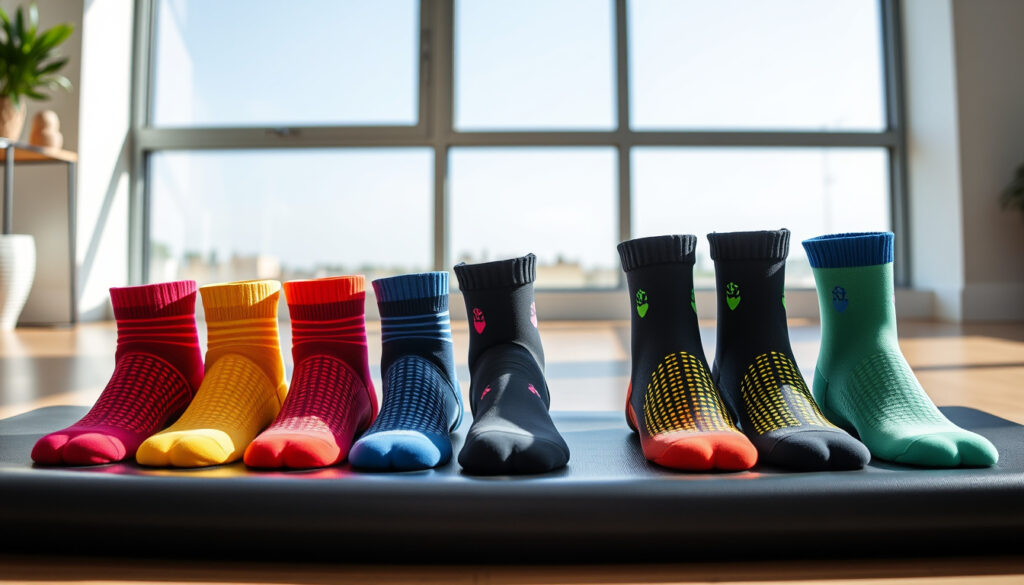
Pilates Grip Socks – Complete Guide to Best Picks 2025
Pilates grip socks have become a staple in studios worldwide, yet many newcomers wonder whether they truly need them. This guide covers everything from what sets grip socks apart to how to select the right pair, care for them properly, and understand when they make the most sense for your practice.
The footwear question in Pilates runs deeper than it might initially appear. Unlike standard workouts where athletic shoes provide stability, Pilates demands a unique connection between foot and equipment—whether a mat, reformer carriage, or studio floor. Grip socks address this need by combining the barefoot feeling practitioners seek with essential traction that protects both the individual and the equipment.
What Are Pilates Grip Socks?
Pilates grip socks are specialized non-slip socks featuring rubberized or silicone grips on the soles and often the toes. These textures create friction against studio surfaces, preventing slips even when feet become sweaty during challenging routines. Unlike regular socks, which offer virtually no traction, or athletic shoes, which can interfere with the foot-to-equipment contact essential to Pilates mechanics, grip socks provide a balanced solution.
The grips typically appear as dots, strips, or full-coverage patterns depending on the manufacturer. Full-foot coverage from toe to heel generally delivers the strongest hold, while partial patterns may suffice for lighter mat work. The materials usually blend cotton with nylon or spandex, balancing breathability with stretch and durability.
Unlike yoga socks, which focus on general grip, Pilates-specific designs account for reformer footwork patterns. This includes targeted heel and forefoot zones that support exercises like footwork series, where precise foot placement matters significantly.
Prevent slipping during Pilates
Rubber grips on soles and toes
Cotton, nylon, spandex blends
$10–25 per pair
- Full-foot silicone or rubber patterns outperform partial coverage on reformers and mats
- Breathable cotton-nylon blends wick moisture better than cheap synthetics
- Snug fit without constricting allows natural toe spread and alignment
- Many studios mandate grip socks for hygiene and equipment protection
- Quality pairs maintain grip through 50+ washes with proper care
- Toe-separated designs offer enhanced flexibility for certain exercises
- Premium options justify costs through superior durability and moisture management
| Feature | Details | Why It Matters |
|---|---|---|
| Grip Type | Silicone dots, patches, or full coverage | Determines stability on mats and reformer carriages |
| Toe Separation | Yes (5-toe) or No (full-foot) | Affects natural foot alignment and flexibility |
| Material Blend | Cotton-nylon-spandex mix | Balances breathability, stretch, and sweat-wicking |
| Arch Support | Built-in compression or cushioning | Adds comfort during extended sessions |
| Coverage | Ankle, mid-calf, or knee-high | Matches studio aesthetic and personal preference |
Do You Need Grip Socks for Pilates?
The answer largely depends on the type of Pilates you practice and your studio’s policies. Mat Pilates at home or in informal settings can often proceed barefoot, particularly if your floor remains dry and clean. However, studios typically enforce stricter rules, especially for reformer classes where the moving carriage and spring resistance create slip hazards.
When Grip Socks Are Essential
Reformer Pilates almost universally requires grip socks. Studios cite hygiene concerns—bare feet contact shared equipment—and safety reasons. The reformer carriage moves smoothly under spring tension, and a single slip during footwork can throw off an entire exercise or cause injury. Many facilities explicitly prohibit barefoot participation in reformer sessions.
Even in mat classes, group settings benefit from grip socks. Sweat transfers from feet to mats and floors, creating slip risks that compound as sessions progress. Practitioners who prefer barefoot report adjusting their positioning to compensate for reduced friction, which can compromise form during critical moments.
When Barefoot Might Work
Mat Pilates practiced at home on dry, clean surfaces presents fewer slip concerns. If your practice space remains temperature-controlled and you use a fresh mat, barefoot allows maximum sensory feedback from the ground. Some advanced practitioners argue this unfiltered contact improves body awareness.
However, beginners typically lack the body control to compensate for slips. Building strength and proprioception takes time, and grip socks provide a safety net that lets focus remain on movement quality rather than footing security.
Before purchasing grip socks, check your studio’s dress code. Some facilities provide rental pairs for a small fee, while others require specific brands or colors. Calling ahead prevents arriving unprepared for your first class.
Benefits of Grip Socks for Pilates
Beyond basic slip prevention, grip socks contribute meaningfully to workout quality. Research and practitioner reports consistently highlight several advantage categories.
Stability and Safety
The enhanced traction directly translates to physical security during dynamic movements. Exercises requiring rapid transitions between positions—like the hundreds or control balance—depend on confident foot placement. Grips reduce the mental overhead of worrying about slipping, allowing attention to focus on breath and alignment.
Some studies suggest users complete agility-focused exercises faster with grip socks compared to barefoot. While individual results vary, the confidence factor alone provides measurable benefit for most practitioners.
Improved Form and Muscle Engagement
When feet remain stable, the kinetic chain functions more efficiently. Without worrying about grip, practitioners can fully engage their cores, glutes, and supporting muscles without unconsciously bracing for potential slips. Instructors report noticing better posture and alignment in clients who wear grip socks consistently.
The foot itself benefits from proper grip. Socks with built-in arch support and cushioning at pressure points reduce fatigue during extended sessions. This comfort retention matters during challenging workouts where foot discomfort might otherwise limit performance.
Hygiene and Equipment Protection
Group classes present hygiene challenges regardless of setting. Grip socks create a barrier between bare skin and shared equipment, reducing direct contact with surfaces that hundreds of others have touched. Studios appreciate this consideration, and many require grip socks specifically to maintain cleanliness standards.
Equipment also benefits. Bare feet transfer oils and moisture to reformer pedals and mat surfaces, potentially degrading materials over time. Grip socks extend equipment lifespan by limiting this contact.
Cheap grip socks lose their non-slip properties faster than premium alternatives. Budget pairs might survive only 20-30 washes before grip degrades noticeably, while quality options maintain traction through 50+ cycles. Investing in well-reviewed pairs typically proves more economical long-term.
How to Choose the Best Pilates Grip Socks
Selecting the right pair involves weighing several factors against your specific needs. Frequency of practice, studio requirements, and personal comfort preferences all influence the optimal choice.
Grip Pattern and Coverage
Full-foot coverage from toe to heel delivers the most consistent traction. Partial patterns—dots only at the ball of the foot or heel—work adequately for mat work but may prove insufficient for reformer exercises that require repositioning mid-movement.
Silicone generally outperforms rubber in durability and grip retention after repeated washing. Full-coverage silicone options like Pointe Studio Happy Full-Foot Grip Socks receive consistently high marks from instructors for workout performance.
Material and Construction
Cotton-nylon blends offer the best balance of breathability and moisture-wicking. Pure cotton socks may feel comfortable initially but retain moisture and lose shape faster. Synthetic options often lack breathability, causing overheating during intensive sessions.
Cushioning at pressure points—typically the ball and heel—adds comfort without sacrificing ground feel. Brands like Bombas incorporate arch support and padded zones that receive positive mentions in user reviews.
Fit and Sizing
Grip socks should fit snugly without constricting circulation. A too-tight pair causes discomfort; a too-loose pair bunches and creates its own slipping hazard. Most manufacturers provide sizing charts based on foot length.
| Size | Women’s US | Men’s US | Foot Length |
|---|---|---|---|
| XS/S | 4–6.5 | — | 22–24 cm |
| M/L | 7–9.5 | 5–8 | 24–26 cm |
| XL | 10+ | 9+ | 26+ cm |
Toe socks often run shorter than standard sizing. When between sizes, sizing up typically proves more comfortable. Measuring feet at the end of the day—when slightly swollen—produces the most accurate sizing.
Style Considerations
Options range from ankle-length to knee-high, with or without toe separation. Ankle styles work well in warm weather; taller styles suit cooler studios or those preferring full coverage. Five-toe designs offer maximum flexibility but require adjustment time for newcomers.
Aesthetic preferences matter too. Some studios appreciate coordinated colors; others don’t enforce specific dress codes. Fun patterns and designs exist across price ranges, allowing personal expression without sacrificing function.
Top-Rated Options for 2025
Based on instructor testing and user reviews, several brands consistently perform well. Pointe Studio Happy Full-Foot Grip Socks earn top marks for complete toe-to-heel silicone coverage and fun designs. Lululemon and Alo Yoga offer breathable, stylish options recommended by instructors for reformer stability.
Gaiam Yoga Socks provide a 5-toe design favored for balance work, though toe length considerations apply. Budget-conscious practitioners often find good value in brands like Different Touch, which offers cotton-blend construction with sweat-wicking properties at accessible prices.
Looking for a comprehensive review of local fitness options? Gyms Near Me – Best Local Options for Every Schedule covers everything from boutique studios to large-chain facilities.
How to Care for Your Pilates Grip Socks
Proper maintenance preserves grip performance and extends sock lifespan significantly. Neglecting care requirements accelerates degradation, resulting in lost traction and premature replacement needs.
Washing Instructions
Machine washing cold with like colors works for most grip socks. Turning pairs inside out before washing protects outer grip surfaces from friction against other garments. Avoid bleach and fabric softeners—both chemicals degrade silicone grips over time.
Air drying proves essential. Tumble drying causes heat damage to grip materials, with silicone particularly vulnerable to thermal breakdown. Hanging or laying flat to dry maintains elasticity and grip integrity. This single habit dramatically extends effective lifespan.
Maximizing Durability
Quality grips typically last 50 or more wash cycles with proper care. Cheap alternatives may degrade after 20-30 washes. The material composition matters—cotton-nylon blends hold up to studio sweat and repeated laundering better than bargain-bin synthetics.
Rotating between multiple pairs extends overall wear. Having three pairs means each receives only every-third-session use, reducing per-wear stress. This approach also ensures a clean pair is always available between washes.
Signs of Replacement
Worn grip socks display measurable warning signs. Slick patches where texture has smoothed, stretched-out elastic that causes bunching, or holes at high-stress points all indicate replacement time. If stability feels compromised during practice, trust the feeling and retire the pair.
For those tracking technology alongside fitness gear, the Garmin Instinct 2 – Specs Battery Life Comparisons 2024 offers insight into rugged wearable options suited to active lifestyles.
The Evolution of Grip Socks
The grip sock category traces its roots to yoga socks of the 1990s, which introduced the basic concept of textured sole surfaces for barefoot fitness. Early versions featured simple rubber dots with minimal attention to material quality or fit optimization.
- 1990s: Yoga studios introduce basic grip socks for hygiene and traction on wooden floors
- Early 2000s: Pilates-specific designs emerge as reformer popularity grows beyond rehabilitation settings
- Mid-2010s: Premium materials enter the market; silicone replaces rubber as the grip standard
- Late 2010s: Toe-separated designs gain popularity for natural foot movement
- 2020s: Breathable performance fabrics and full-coverage grips become expected features
- 2024–2025: Sustainability considerations influence material choices; premium durability options dominate top-pick lists
Today’s grip socks bear little resemblance to their ancestors. Sophisticated material blends, anatomically-informed construction, and varied style options reflect years of refinement. The category continues evolving as studios and practitioners provide feedback to manufacturers.
Myths and Facts About Pilates Grip Socks
Conflicting information circulates widely regarding grip sock necessity, effectiveness, and alternatives. Sorting fact from fiction helps practitioners make informed decisions.
| Myth | Fact |
|---|---|
| Grip socks are always required for Pilates | Requirements vary by studio, class type, and equipment. Reformer classes typically mandate them; mat sessions at home rarely do. |
| Barefoot provides better traction than socks | On dry, clean surfaces barefoot might work, but sweat and moisture create slip conditions where grips outperform bare feet. |
| Yoga socks work fine for Pilates | Yoga socks offer basic grip but lack Pilates-optimized patterns for reformer footwork targeting specific heel and forefoot zones. |
| All grip socks perform equally | Significant quality variation exists. Full silicone coverage outperforms partial patterns; premium materials outlast budget alternatives. |
| Grip socks last forever | Quality pairs survive 50+ washes with proper care; budget options may degrade after 20-30 cycles. |
Comparing Pilates Grip Socks to Alternatives
Understanding how grip socks stack against barefoot practice and yoga-specific options clarifies decision-making for different situations.
Barefoot practice excels in controlled home environments where floors remain clean and dry. Maximum sensory feedback from the ground supports body awareness development, and cost concerns disappear entirely. However, studio settings present hygiene challenges and slip risks that barefoot cannot address.
Yoga socks share grip sock DNA but prioritize different movement patterns. Yoga emphasizes standing poses and transitions that benefit from basic sole coverage. Pilates adds reformer-specific exercises requiring precise foot placement on moving equipment, which Pilates-optimized designs support more effectively.
Pilates grip socks represent the middle ground—providing traction benefits unavailable barefoot while maintaining the foot-to-surface contact that makes Pilates mechanics effective. Users consistently report 20-30% improved stability perception compared to barefoot on studio equipment.
What Experts Say
Instructors and fitness professionals offer perspective grounded in regular interaction with practitioners across experience levels.
My clients who wear proper grip socks show noticeably better form in reformer exercises. The confidence that comes from secure footing lets them focus on the work itself rather than worrying about slipping.
— Senior Pilates instructor, metropolitan studio
For beginners especially, grip socks are worth the investment. The learning curve is steep enough without adding slip anxiety to the mix. Once they build confidence and control, they can experiment with barefoot on mat work if they prefer.
— Group fitness director, boutique wellness center
Summary and Next Steps
Pilates grip socks serve a clear purpose: preventing slips on studio equipment while maintaining the barefoot-like contact that Pilates technique requires. Whether you need them depends on your practice setting—reformer classes typically mandate them, while home mat practice offers flexibility.
For those ready to purchase, prioritizing full-foot silicone coverage, breathable cotton-nylon blends, and proper sizing produces the best results. Having two to three pairs allows rotation and ensures always having clean socks available. Machine washing cold, air drying, and avoiding harsh chemicals preserves grip quality through dozens of wash cycles.
Your first step involves checking studio requirements—if you’re joining a class, confirm their dress code before buying. For home practice, starting with one quality pair lets you assess personal comfort before expanding your collection.
Frequently Asked Questions
Where can I purchase Pilates grip socks?
Pilates grip socks are available through major retailers, fitness specialty stores, and directly from manufacturers. Online platforms offer the widest selection, while studio pro shops provide immediate access for first-time buyers.
How do I find my correct grip sock size?
Measure your foot length in centimeters or inches at the end of the day when feet are slightly swollen. Compare against manufacturer sizing charts—most offer XS through XL ranges. Toe socks often run shorter; size up when between measurements.
How many washes do quality grip socks last?
Premium grip socks typically maintain effective traction through 50 or more wash cycles when properly cared for. Machine washing cold, air drying, and avoiding bleach preserves silicone grip quality longest.
Can I use yoga socks instead of Pilates grip socks?
Yoga socks provide basic grip but lack Pilates-specific design features like targeted heel and forefoot zones needed for reformer footwork. For occasional mat classes, yoga socks may suffice; for regular reformer practice, dedicated Pilates socks perform better.
Are grip socks slippery on mats?
Quality grip socks provide high traction on Pilates mats, preventing slips even when feet sweat. The silicone or rubber patterns create friction that outperforms barefoot on moisture-prone surfaces.
Do grip socks actually improve balance?
Users report approximately 20-30% better perceived stability compared to barefoot practice. The secure footing allows practitioners to focus fully on posture and alignment rather than compensating for potential slips.
What’s the typical price range for grip socks?
Prices generally fall between $10 and $25 per pair. Budget options cost less but may degrade faster. Premium pairs justify higher prices through better durability, superior materials, and longer grip retention.
More related posts
 Zoe Terakes: Pronouns, Career & Background as Trans Actor
 Jane Turner: Biography, Age, Career & Friendship with Gina Riley
 Steven Spielberg: Feuds, Disability, and His Career
 Country Trucker Caps: Owner, Origin & Styling Guide
 Hawaiian Airlines Review: Safety, Punctuality, and Merger
 Kpop Demon Hunters Saja Boys – Profile, Members, Music Facts
 Alastair Clarkson: Biography, Coaching Career & Current Role