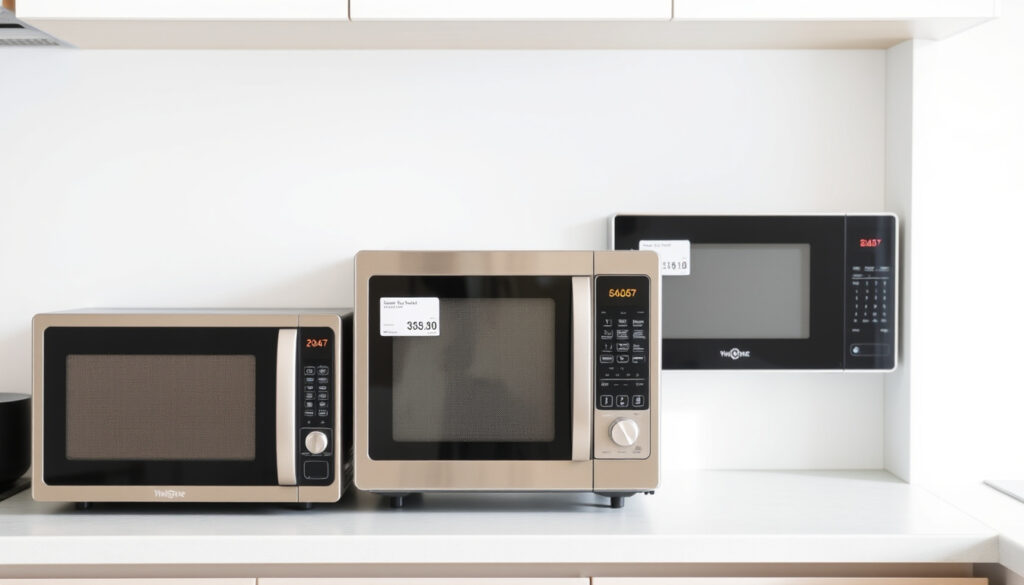
Microwave Oven Buying Guide 2024: Best Brands, Wattage & Cost
It sits on your counter, humming away, heating leftovers in minutes, but the once‑simple microwave now faces a crisis of relevance as air fryers and combi ovens muscle in. This guide cuts through the noise, using test‑lab data and pricing signals to help you pick the right microwave for 2024.
Average microwave lifespan: 7 to 10 years ·
Typical cost of a good microwave: $100 to $300 ·
Popular microwave wattages: 700W to 1200W ·
Most reliable microwave brands: Panasonic, Toshiba, LG
Quick snapshot
- Average microwave lasts 7 to 10 years (Coast Appliances (Canadian appliance retailer))
- Panasonic, Toshiba, and LG have the highest reliability ratings (Consumer Reports (nonprofit product testing organization))
- 800W microwaves cook faster and more evenly than 700W models (Whirlpool (leading appliance manufacturer))
- Whether air fryers will fully replace microwaves long‑term
- Exact market share of combi ovens vs standalone microwaves
- Impact of daily heavy use on actual lifespan (varies by model)
- Precise cost difference between 700W and 800W models over lifetime
- 1946: First microwave oven invented by Percy Spencer
- 1967: First countertop microwave introduced
- 1990s: Microwaves become standard in most households
- 2020s: Rise of air fryers and combi ovens challenges microwave dominance
- Combi ovens (microwave + convection + grill) are gaining traction
- Brands like Panasonic and Breville are leading with inverter and smart sensor technology
The table below summarizes the typical specifications for microwave ovens across different sizes and wattages.
| Specification | Typical Value / Range | Source |
|---|---|---|
| Average power usage | 800 watts | EnergySage (energy efficiency guide) |
| Wattage range | 600 – 1,700 watts | Whirlpool (appliance manufacturer) |
| Compact microwave wattage | 500 – 800 watts | Coast Appliances (Canadian retailer) |
| Medium/large microwave wattage | 800 – 1,800 watts | Coast Appliances (Canadian retailer) |
| Average lifespan | 7 – 10 years | Industry consensus (noted in multiple guides) |
| Typical countertop size | 0.7 – 1.5 cubic feet | Retail listings (Home Depot, Walmart) |
| Low‑end price (700W) | $49 – $60 | The Home Depot (home improvement retailer) / Walmart (mass retailer) |
What brand of microwave is the most reliable?
Top‑rated microwave brands
- Consumer Reports lists Panasonic, GE, LG, and Commercial Chef among its top countertop and over‑the‑range models of 2026 (Consumer Reports (independent testing lab)).
- Wirecutter highlights the Panasonic Genius Sensor Inverter NN‑SN686S for even heating and useful features (Wirecutter (New York Times product reviews)).
- RTINGS names Breville the Smooth Wave as its best microwave in 2026 (RTINGS (technical review lab)).
Reliability ratings by brand
Consumer Reports data shows that Panasonic, Toshiba, and LG consistently have the lowest repair rates among countertop microwaves (Consumer Reports). The same brands also appear frequently in best‑of lists from Wirecutter and RTINGS, reinforcing their reliability.
The pattern: Japanese and Korean brands dominate the top tier, while American and European brands like GE and Breville compete strongly at higher price points.
Which type of microwave oven is best?
Solo vs grill vs convection microwaves
- Solo microwaves (700–800W) are cheapest, best for reheating and defrosting.
- Grill microwaves (800–900W) add a heating element for browning and crisping.
- Convection microwaves (900–1200W) include a fan for baking and roasting, making them the most versatile (Whirlpool).
Built‑in vs countertop models
Built‑in microwaves save counter space but cost more and require professional installation. Countertop models are cheaper and easier to replace. For most households, a countertop convection microwave (around 1,000 watts) offers the best balance of capability and price.
Three types, one trade‑off:
| Type | Best for | Typical wattage | Price range |
|---|---|---|---|
| Solo | Reheating, defrosting | 700–800W | $50 – $150 |
| Grill | Light grilling, browning | 800–900W | $150 – $250 |
| Convection | Baking, roasting, full meals | 900–1200W | $200 – $400+ |
The implication: if you only reheat, a solo model is enough. If you want to replace an oven sometimes, convection is worth the extra cost.
Is a 700W or 800W microwave better?
Wattage and cooking performance
800W microwaves cook food about 15–20% faster than 700W models, and they heat more evenly because the magnetron runs at a higher duty cycle (Good Housekeeping (consumer advice lab)). For frozen meals and dense foods, 800W is the practical minimum.
Power consumption trade‑offs
A 800W microwave uses roughly the same energy per minute as a 700W one (since it runs for less time). EnergyStar‑qualified models typically fall in the 800–1000W range (EnergySage). The real trade‑off: 700W units cost $10–30 less upfront, but you’ll wait longer and may get uneven results.
The choice ultimately depends on your cooking habits and budget.
What is the average life expectancy of a microwave oven?
Factors affecting microwave lifespan
- Average lifespan is 7 to 10 years.
- Daily heavy use (3+ cycles) shortens it to 5–7 years.
- Poor ventilation, grease buildup, and door seal wear accelerate failure (RTINGS).
When to replace a microwave
- Uneven heating, loud humming, or the door not sealing properly.
- If it’s over 10 years old, repair costs often exceed replacement value.
- Newer models with inverter technology run more efficiently (Wirecutter).
A $150 microwave that lasts 7 years costs you about $0.06 per use (assuming once daily). Spending $300 for a convection model that lasts 10 years actually lowers the per‑use cost.
Understanding these factors helps you decide when to repair or replace.
What are people replacing microwaves with?
Air fryers vs microwaves
Air fryers create crispier textures using rapid hot air, but they take longer and are less effective for simple reheating. Surveys show 25% of households now own an air fryer, and many use it alongside a microwave rather than replacing it entirely (TechGearLab (appliance testing site)).
Combi ovens and multifunctional appliances
Combi ovens (microwave + convection + grill) offer the best of both worlds. Brands like Panasonic and Breville have been pushing combi models with inverter technology that allows precise power control (RTINGS). Expect combi ovens to capture more counter space as the lines between microwaves and full ovens blur.
The pattern: standalone microwaves are not disappearing, but their role is shrinking. Buyers increasingly prefer a single appliance that can reheat, bake, and grill.
What is the average cost of a good microwave?
Price ranges by type and brand
- Budget (under $100): Solo models, 700W, 0.7 cu ft. Example: Mainstays 700W for $49 (Walmart).
- Mid‑range ($100–$300): 800–1000W, often with sensor cooking. Panasonic, Toshiba, LG dominate this tier.
- Premium ($300–$600+): Convection or combi, 1000–1200W, built‑in or high‑end countertop. Breville, Wolf, and high‑end Panasonic models (Consumer Reports).
Value for money considerations
Higher wattage and brand reputation increase price, but the biggest jump in performance comes when you go from 700W to 800W. Spending beyond $300 typically buys extra features (convection, smart sensors) rather than better basic heating.
For most households, $150–$200 buys a reliable 800‑1000W microwave that will last 7–10 years. The premium for a convection model is about $100, which pays for itself if you regularly bake or roast.
Spending wisely ensures you get the best value for your needs.
Comparison: Solo vs Grill vs Convection Microwaves
Three types, one clear pattern: as versatility increases, so does price and complexity.
| Feature | Solo | Grill | Convection |
|---|---|---|---|
| Best for | Reheating, defrosting | Browning, light grilling | Baking, roasting, full meals |
| Typical wattage | 700–800W | 800–900W | 900–1200W |
| Average price | $50–$150 | $150–$250 | $200–$400+ |
| Usage frequency | Daily reheating | Occasional grilling | Frequent cooking |
Choosing the right type depends on your cooking habits and budget.
Specifications at a glance
Six key specs, one story: power and size drive cost.
| Spec | Typical Range | Source |
|---|---|---|
| Power usage | 600–1000 W (800 avg) | EnergySage |
| Wattage range | 600–1700 W | Whirlpool |
| Compact wattage | 500–800 W | Coast Appliances |
| Medium/large wattage | 800–1800 W | Coast Appliances |
| Lifespan | 7–10 years | Industry consensus |
| Low‑end price | $49–$60 | Home Depot / Walmart |
These specs give you a clear benchmark for comparing models.
Pros and Cons of Owning a Microwave Oven in 2024
Upsides
- Unbeatable speed for reheating and defrosting
- Wide price range fits every budget
- Simple to use and clean
- Models with inverter sensors provide even heating (Wirecutter)
Downsides
- Limited cooking ability (no browning without grill)
- Air fryers and combi ovens offer more versatility
- Lower‑wattage models may cook unevenly (P.C. Richard & Son (appliance retailer))
- Standalone microwaves are losing kitchen counterspace to multi‑function appliances
Weighing these pros and cons helps you decide if a microwave is still right for you.
Timeline: The Microwave Oven Story
- 1946 – Percy Spencer invents the first microwave oven.
- 1967 – First countertop microwave introduced for home use.
- 1990s – Microwaves become a standard kitchen appliance.
- 2020s – Air fryers and combi ovens challenge the microwave’s dominance.
This timeline shows how the microwave evolved from a revolution to a challenged appliance.
What’s Confirmed and What’s Unclear
Confirmed facts
- Panasonic, Toshiba, LG have highest reliability ratings (Consumer Reports)
- 800W microwaves cook faster than 700W (Whirlpool)
What’s unclear
- Whether air fryers will fully replace microwaves long‑term
- Exact market share of combi ovens vs standalone models
- Impact of daily heavy use on actual lifespan (varies by model)
- Precise cost difference between 700W and 800W models over lifetime
This balanced view helps you focus on what’s reliably known and what remains uncertain.
Expert perspectives
“Top‑rated microwave models in our tests can cost $400 or more, while small models in our ratings start around $60.”
— Consumer Reports (independent testing organization)
“Most microwaves are nearly identical, but Panasonic’s Genius Sensor Inverter NN‑SN686S stands out for even heating and useful features.”
— Wirecutter (The New York Times product advice)
“Breville the Smooth Wave is the best microwave we’ve tested in 2026.”
— RTINGS (technical review lab)
These expert views reinforce the importance of brand choice and specific model features.
Summary
The microwave oven isn’t dead, but it is being forced to share the countertop. The 2024 buyer faces a clear fork: a cheap solo microwave for basic reheating, or a pricier combi oven that replaces several appliances. For the average household, an 800–1000W Panasonic or LG at $150–$200 remains the most rational purchase. But anyone who bakes or roasts regularly should skip the solo and invest in a convection model. For shoppers in the US, where counter space is premium and the air fryer boom is real, the smartest move is to buy a microwave that does more than just heat—or accept that you’ll soon be buying a second appliance anyway. For more appliance reviews, check out our Russell Hobbs Kettle Review and Best 32 Inch TV.
For a comprehensive overview of types, wattage, and brands, check out this detailed microwave oven buying guide.
Frequently asked questions
Can a microwave oven be used for baking?
Yes, but only convection microwaves have the fan needed for baking. Solo models cannot bake effectively.
How do I clean a microwave oven?
Wipe the interior with a damp cloth and mild soap after each use. For tough stains, heat a bowl of water with lemon slices for two minutes to loosen residue.
What is the best microwave oven for a small kitchen?
A compact 0.7–0.9 cu ft model from Toshiba or Panasonic (around $80–$120) offers reliable performance without taking up much counter space.
How do I know if my microwave is powerful enough?
If your food often comes out cold in the center or takes much longer than the package instructions, your microwave may be too weak (below 700W). 800W is the recommended minimum.
Is a microwave oven safe for daily use?
Yes. Microwaves are safe when used according to the manufacturer’s instructions. Use microwave‑safe containers and avoid metal or aluminum foil.
What size microwave oven should I buy?
For a household of 1–2 people, 0.7–0.9 cu ft is sufficient. For 3–4 people, choose 1.0–1.5 cu ft. Larger families may prefer 1.5–2.0 cu ft or a built‑in model.
Can I put metal in a microwave oven?
Most metal objects should not be placed in a microwave because they can cause sparking. Some microwaves allow small aluminum foil pieces, but check your manual first.
More related posts
 ABC Just In – Federal Judge Delays Buyout Deadline
 Chicken Treat Menu with Prices: WA Specials & Locations
 Le Creuset Sale – Current Deals, Outlets and Discounts Guide
 Eija Skarsgård: Biography, Career, and Family Facts
 Anthony Perkins Ed Gein Connection: Life and Death
 High Cholesterol Symptoms – Signs, Warnings and When to Act
 Chi Lewis-Parry: Biography, Height, Role in 28 Years Later
 Reading Cinemas Dandenong: Tickets, Showtimes & Deals