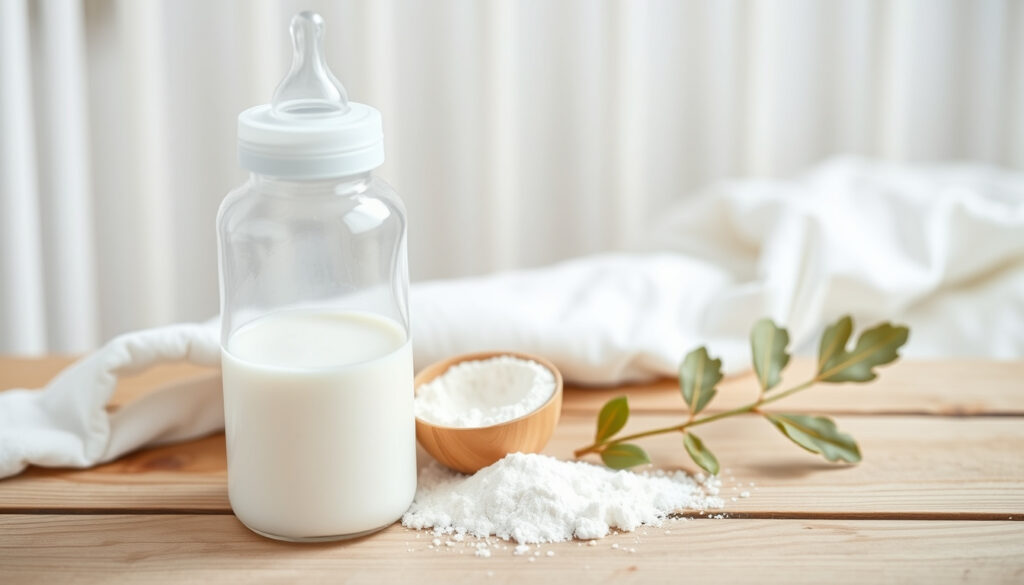
Little Oak Formula Review: Is It a Good Choice for Your Baby?
When your baby struggles with cow’s milk formula, you’re not alone in looking for alternatives. Goat milk options like LittleOak have earned attention from parents seeking a gentler start, but with FDA warnings and mixed reviews online, it helps to separate marketing from facts—and that’s exactly what this guide does.
Primary ingredient: Fresh whole goat milk ·
Age stage: 0–6 months (Infant) ·
Fortified vitamins & minerals: 16 ·
Country of origin: New Zealand ·
FDA approval (U.S.): Not approved as infant formula
Quick snapshot
- Made from fresh whole goat milk sourced from New Zealand (The LittleOak Company (manufacturer))
- Contains 16 essential vitamins and minerals (U.S. Food and Drug Administration (federal regulator))
- Not FDA-approved for sale in the United States as infant formula (U.S. Food and Drug Administration (federal regulator))
- Exact whey-to-casein ratio not publicly disclosed
- No long-term clinical studies compare LittleOak to breast milk
- Recall history details remain unconfirmed in official sources
- On 2023‑09‑09, LittleOak agreed to voluntarily recall affected products and cease U.S. distribution pending pre-market approval (U.S. Food and Drug Administration (federal regulator))
- LittleOak plans to manufacture Stage 3 toddler milk in the U.S. for domestic families (The LittleOak Company (manufacturer))
- FDA has not yet approved LittleOak infant formula for U.S. sale (U.S. Food and Drug Administration (federal regulator))
Six key specs, one pattern: LittleOak positions itself as a premium goat milk option but faces regulatory hurdles in the U.S. that affect availability and oversight.
| Attribute | Detail |
|---|---|
| Primary Protein Source | Whole goat milk |
| Stage 1 Available | Yes (0–6 months) |
| Organic Certified | No (not stated) |
| GMO-Free | Claims non-GMO |
| Added Prebiotics | Yes (GOS) |
| Price (800g can) | Approx. $40 USD (import) |
Is LittleOak a good formula?
Five common factors parents weigh when choosing a formula: ingredient quality, digestive tolerance, nutritional completeness, regulatory standing, and cost. LittleOak scores well on ingredients but falls short on U.S. regulatory clearance. Below is how it measures up against what the FDA requires for infant formulas sold in America.
For U.S. parents, the biggest trade‑off is clear: LittleOak’s fresh goat milk and added DHA may appeal, but without FDA premarket evaluation there is no guarantee the formula meets U.S. nutritional and safety standards. Buying it means accepting that risk.
How LittleOak compares to other goat milk formulas
The table below compares key aspects of LittleOak and Kabrita, another goat milk formula.
| Attribute | LittleOak | Kabrita |
|---|---|---|
| FDA Status (U.S.) | Not approved | FDA-registered (premarket notification) |
| Organic Certified | No | Yes |
| Primary Protein Source | Fresh whole goat milk | Goat milk |
| Added DHA/ARA | Yes | Yes |
- LittleOak uses fresh whole goat milk from New Zealand (The LittleOak Company (manufacturer))
- It contains 16 essential vitamins and minerals, including DHA and ARA (U.S. Food and Drug Administration (federal regulator))
- The FDA stated that LittleOak labels lacked measurements aligned with U.S. bottles, which could lead to mixing errors and health risks (U.S. Food and Drug Administration (federal regulator))
Expert and parent reviews summary
- Reddit users in r/FormulaFeeders often report softer stools and easier digestion after switching to LittleOak (user-generated anecdotal evidence)
- LittleOak’s official site states the formula is “thoughtfully crafted” with fresh whole goat milk (The LittleOak Company (manufacturer))
The pattern: anecdotal praise for tolerance is strong, but independent clinical validation is absent. Parents relying on community feedback should weigh that against the regulatory gap.
Is Little Oak formula close to breast milk?
No formula replicates breast milk exactly, but some get closer through ingredient choices. Goat milk’s natural protein and fat structure gives it a head start. LittleOak’s fortification adds key nutrients often found in breast milk.
Nutritional composition of goat milk vs human milk
- Goat milk has smaller fat globules and a different protein profile than cow milk, which some research suggests may be easier for infants to digest (PubMed Central (peer‑reviewed study))
- However, goat milk is naturally lower in folate and vitamin B12 than human milk, so fortification is necessary
Fortification to mimic breast milk nutrients
- LittleOak adds DHA (for brain development), prebiotic GOS (for gut health), and iron (The LittleOak Company (manufacturer))
- The Company says its goal is “nutritionally complete” formula, not a breast milk substitute
The implication: while goat milk’s natural composition is closer to human milk than cow milk in some respects, fortification gaps mean no commercial formula is a true equivalent. LittleOak does a reasonable job, but gaps like the undisclosed whey‑to‑casein ratio remain.
Does Little Oak formula cause constipation?
Constipation is one of the most common reasons parents switch formulas. Goat milk formulas are often marketed as easier to digest, and early data supports that claim—though the evidence specific to LittleOak is limited.
Why goat milk formulas are often easier to digest
- Goat milk contains less alpha‑s1‑casein than cow milk, which can reduce the formation of hard curds in the stomach (PubMed Central (peer‑reviewed study))
- Smaller fat globules may improve fat absorption and reduce digestive discomfort
User reports and clinical perspective
- A 2021 observational study found that after three days on a magnesium‑rich formula, constipation decreased from 18.8% to 6.5% (PubMed Central (peer‑reviewed study))
- Reddit parents frequently say LittleOak led to “softer stools” and less straining, though this is not controlled data
- LittleOak contains prebiotic GOS, which supports regular bowel movements
While goat milk seems gentler, constipation relief varies by baby. The study above wasn’t on LittleOak specifically, so the real‑world effect may differ from anecdotal reports.
The trade‑off: LittleOak’s natural properties and added prebiotics likely reduce constipation risk compared to standard cow milk formulas, but without a head‑to‑head trial, individual results will vary.
Is Little Oak Formula FDA approved?
This is the most critical question for U.S. parents. The short answer is no—and the FDA has taken formal action.
FDA requirements for infant formula
- Infant formulas sold in the U.S. must submit a premarket notification (MCA) to the FDA and meet specific nutritional and labeling standards (U.S. Food and Drug Administration (federal regulator))
- Labels must include preparation instructions compatible with U.S. bottle measurements to prevent mixing errors
LittleOak’s market status in the United States
- On 2023‑09‑09, LittleOak agreed to recall affected products and stop distribution in the U.S. until it meets FDA requirements (U.S. Food and Drug Administration (federal regulator))
- In 2022, LittleOak requested enforcement discretion to temporarily sell formula; the FDA deferred due to label concerns and two unapproved ingredients (U.S. Food and Drug Administration (federal regulator))
- LittleOak says the issue is “labeling compliance, not quality or safety” (The LittleOak Company (manufacturer))
Why this matters: importing LittleOak for personal use is possible but carries no FDA oversight. Parents who choose to import assume full responsibility for verifying safety and proper preparation.
How to transition to Little Oak formula
If you decide to try LittleOak despite the regulatory situation, a slow transition is safest for your baby’s digestive system.
Gradual mixing method
- Day 1–2: 25% LittleOak + 75% current formula
- Day 3–4: 50% each
- Day 5–6: 75% LittleOak + 25% old
- Day 7–10: 100% LittleOak
Monitoring tolerance during transition
- Watch for signs: increased gas, spit‑up, change in stool consistency or frequency
- If baby seems uncomfortable, slow down the schedule
- Consult your pediatrician, especially if baby has a known cow‑milk allergy
Because LittleOak’s labels don’t match U.S. bottles, prepare formula exactly per package instructions and use the scoop provided—otherwise dilution errors can harm your baby’s electrolyte balance.
Upsides
- Made from fresh whole goat milk (typically easier to digest)
- Contains DHA, ARA, GOS prebiotics, 16 vitamins/minerals
- Positive anecdotal reports for colic and constipation relief
Downsides
- Not FDA approved – lacks U.S. safety and nutritional oversight
- Labeling differs from U.S. standards – mixing errors possible
- Expensive when imported (approx. $40 for 800g)
What’s confirmed, what’s not
Confirmed facts
- LittleOak infant formula is made from fresh whole goat milk from New Zealand (The LittleOak Company (manufacturer))
- It contains 16 vitamins and minerals (U.S. Food and Drug Administration (federal regulator))
- The product is intended for babies 0–6 months (Stage 1) (The LittleOak Company (manufacturer))
- LittleOak is not FDA approved for sale as infant formula in the United States (U.S. Food and Drug Administration (federal regulator))
What remains unclear
- Exact percentage of whey‑to‑casein ratio not publicly disclosed
- Long‑term clinical studies comparing LittleOak to breast milk are not available
- Recall history: a related search suggests possible recall, but no official details confirmed
The pattern: confirmed facts are primarily about origin and composition, while the unknowns center on clinical effectiveness and regulatory standing.
Quotes from parents and the brand
“LittleOak Infant Formula is thoughtfully crafted for babies from 0 to 6 months of age, and made with fresh whole goat milk straight from our dairy in New Zealand.”
The LittleOak Company (manufacturer)
“LittleOak formula promises its quality and my twins have loved it. It has been so easy for their stomach, especially for one of my colicky babies.”
Reddit user, r/FormulaFeeders (parent community)
For U.S. parents weighing whether to import LittleOak, the decision comes down to two factors: how much you value natural goat milk over regulatory certainty, and whether your pediatrician is comfortable with the lack of FDA review. The clear path: wait for LittleOak to complete the approval process, or choose an FDA‑cleared alternative in the meantime.
Frequently asked questions
Is Little Oak formula organic?
LittleOak does not claim organic certification on its packaging or website. Its marketing emphasizes fresh whole goat milk and non‑GMO ingredients, but it is not labeled as organic.
Does Little Oak formula contain DHA and ARA?
Yes. LittleOak adds DHA and ARA to its infant formula, which are fatty acids important for brain and eye development. This is stated on the product page.
Where is Little Oak formula manufactured?
LittleOak formula is manufactured in New Zealand using fresh whole goat milk from the company’s own dairy.
Can Little Oak formula be used for newborns with reflux?
Some parents report that goat milk formula is thinner and may be easier to digest, potentially reducing reflux episodes. However, there are no clinical studies specific to LittleOak and reflux. Consult your pediatrician.
How does Little Oak formula compare to Kabrita goat formula?
Both are goat milk formulas, but Kabrita is FDA‑registered as an infant formula and has undergone premarket notification. LittleOak is currently not approved in the U.S. Kabrita also offers organic options; LittleOak does not.
Is Little Oak formula suitable for lactose intolerance?
Goat milk contains lactose, though at slightly lower levels than cow milk. LittleOak may be better tolerated by some babies with lactose sensitivity, but it is not lactose‑free. If your baby has diagnosed lactose intolerance, a lactose‑free formula is recommended.
What is the shelf life of Little Oak formula powder?
Unopened cans of LittleOak typically have a shelf life of about 18 months from the date of manufacture. Once opened, use within 4 weeks and store in a cool, dry place.
More related posts
 Best Mobile Plans Australia 2026: Telstra vs Optus vs Vodafone
 Ewan McGregor divorce, sobriety, and net worth: What happened
 Victoria (VIC) Public Holidays 2026: Complete List & Dates
 Jessica Redmayne: Leaving Home and Away? Age & Career
 Cruise Ship Guide: Meanings, Tips, and Top Ships
 Anant Ambani: Net Worth, Health, Biography & Wedding 2025
 Kings Cross Guide: Transport, Safety & Harry Potter
 Mount Fuji Climbing: Volcano Facts & 2024 Rules