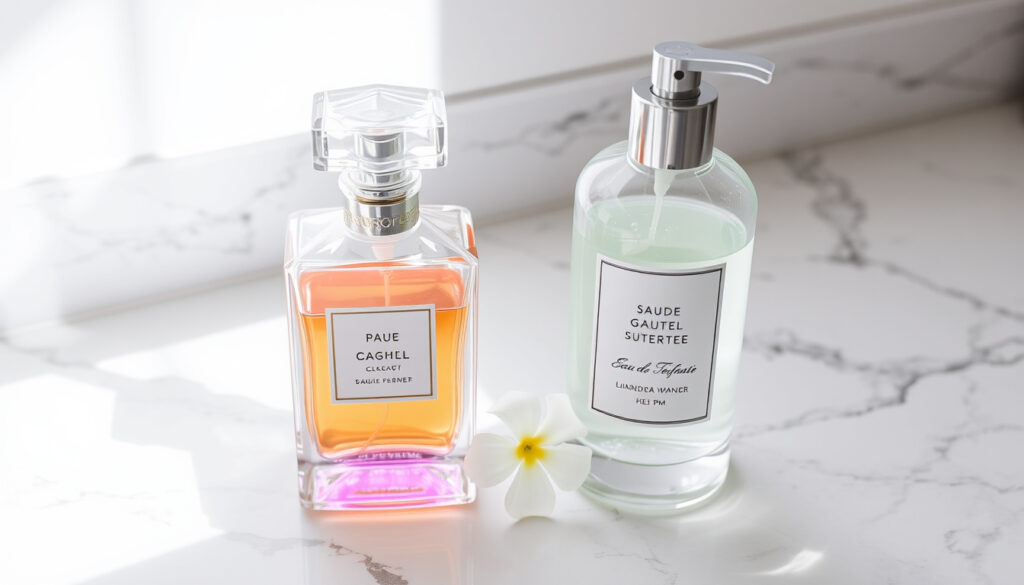
Eau de Toilette vs Perfume: What’s the Difference
Anyone who’s tried to pick a fragrance from the rows of bottles at a department store already knows the labels feel like codes. Eau de Toilette, Eau de Parfum, Parfum — each name hints at how strong the scent will be, but the real story is in the oil concentration. This guide breaks down what Eau de Toilette actually is, how it compares to other fragrance types, and how to choose the right strength for your day.
Fragrance oil concentration: 5–15% ·
Typical longevity: 2–4 hours ·
Alcohol content: 80–90% ·
Common price per ml: Less than Eau de Parfum ·
Primary use: Everyday, light application
Here is a quick comparison of the main fragrance types.
| Eau de Toilette | Eau de Parfum | Parfum (Extrait) | |
|---|---|---|---|
| Oil concentration | 5–15% | 15–20% | 20–30% |
| Longevity | 2–4 hours | 4–6 hours | 6–8+ hours |
| Best for | Daytime | Evening | Special occasions |
Quick snapshot
- 5–15% fragrance oils (Floris London, heritage perfumery)
- 2–4 hours longevity (The Perfume Shop, UK retailer)
- Light, fresh scents (Floris London, heritage perfumery)
- Ideal for daytime use (Floris London, heritage perfumery)
- 15–20% fragrance oils (Scento, fragrance blog)
- 4–6 hours longevity (L’Art Vévien, fragrance educator)
- Stronger projection (Scento, fragrance blog)
- Evening and special occasions (Scento, fragrance blog)
- 20–30% fragrance oils (Scento, fragrance blog)
- 6–8+ hours longevity (Scento, fragrance blog)
- Rich, complex (Scento, fragrance blog)
- Most expensive per ml (Scento, fragrance blog)
- 2–5% fragrance oils (Scento, fragrance blog)
- 1–2 hours longevity (Scento, fragrance blog)
- Very light (Scento, fragrance blog)
- Often unisex (Scento, fragrance blog)
Five key facts about Eau de Toilette, one pattern: the lower the oil concentration, the shorter the scent’s life on your skin, but also the lighter and more refreshing the feel.
| Label | Value |
|---|---|
| Fragrance oil concentration | 5–15% for EDT |
| Alcohol content | 80–90% typically |
| Longevity | 2–4 hours on skin |
| Application method | Spray on pulse points |
| Common price range | $30–$80 per 100ml (brand-dependent) |
What does eau de toilette mean?
Etymology of eau de toilette
“Eau de toilette” translates directly from French as “water of the toilette.” That might sound odd to English speakers, but “toilette” in French refers to the entire ritual of washing, dressing, and grooming, not the bathroom fixture. Merriam-Webster (American dictionary authority) defines it as “a perfumed liquid containing a lower percentage of fragrant oils than ordinary perfume.” Historically, these lightly scented waters were used in the 17th and 18th centuries by French aristocrats as part of their daily grooming routine — a quick splash after washing rather than a heavy dousing.
Why ‘toilette’ refers to grooming routines
The practice of using scented waters for “la toilette” dates back centuries. Unlike thick, oil-rich perfumes worn primarily by nobility, eau de toilette was designed as a fresher, more accessible option for daily use. This distinction still holds today: eau de toilette is the everyday fragrance workhorse, carrying 5–15% fragrance oils according to Floris London (heritage British perfumery), and containing 80–90% alcohol as a carrier. That high alcohol content helps the scent evaporate quickly, which gives EDT its light, airy profile.
EDT was never meant to be a “cheaper” perfume — it was always a different category for a different purpose: quick, refreshing, and built for reapplication during the day.
The implication: The term “toilette” tells you more about when and how to wear it than about quality. Eau de toilette is not a diluted version of perfume; it’s a deliberate formulation for a lighter touch.
What is the difference between eau de toilette and perfume?
Concentration comparison
The central difference between eau de toilette and perfume (also called Parfum or Extrait) is the concentration of fragrance oils. Floris London reports that EDT typically contains 5–15% fragrance oils, while Parfum ranges from 20–30%. Eau de Parfum (EDP) sits in between at 15–20%, according to The Perfume Shop (UK fragrance retailer). That’s a difference of roughly 2 to 4 times more concentrated oils in Parfum compared to EDT.
Longevity difference
Concentration directly affects how long a scent lasts on your skin. The Perfume Shop notes that EDT lasts about 2–4 hours, while EDP lasts roughly 4–5 hours. L’Art Vévien (fragrance education source) gives similar ranges: EDT at 4–6 hours and EDP at 6–8 hours. Parfum can last 6–8 hours or more. The wide spread depends on individual skin chemistry, ambient temperature, and the specific formula.
Price per ml
Because Parfum uses more expensive fragrance oils per milliliter, it commands a higher price. A 100ml bottle of EDT from a designer brand might cost $30–$80, while the same brand’s Parfum in a much smaller 15–30ml bottle can cost $80–$200 or more. EDP falls in between. The cheaper price per ml makes EDT the most economical choice for daily wearers who don’t mind reapplying.
When to use each
EDT’s light, volatile character suits daytime, office, and warm-weather settings. Its quick evaporation means it won’t overwhelm a room or linger too heavily. EDP and Parfum, with their richer concentration, project more strongly and last longer, making them better for evenings, cool weather, or formal events. Scento (fragrance comparison blog) describes EDT as “best suited to casual daytime wear or summer use,” while EDP fits “daily use or evening events.”
Choosing EDT over Parfum isn’t about saving money — it’s about matching the fragrance’s behavior to your lifestyle. If you work in a scent-free office or live in a warm climate, EDT is the better tool for the job.
What are the 4 levels of perfume?
Parfum (Extrait)
Parfum, also called Extrait, is the most concentrated fragrance form, containing 20–30% fragrance oils (Floris London). It lasts 6–8 hours or more and has the richest, most complex scent profile. It’s applied sparingly — often a single dab on pulse points (The Perfume Shop).
Eau de Parfum
Eau de Parfum (EDP) holds 15–20% fragrance oils, offering a balance of longevity and projection. L’Art Vévien cites 6–8 hours of wear, making it the most popular choice for evening and special-occasion wear.
Eau de Toilette
Eau de Toilette (EDT) ranges from 5–15% fragrance oils. Scento calls it “the lightest common fine fragrance concentration.” With 80–90% alcohol, it evaporates quickly and lasts 2–4 hours on average. It’s the go-to for everyday freshness.
Eau de Cologne
Eau de Cologne (EDC) is the lightest tier, with just 2–5% fragrance oils. It lasts only 1–2 hours and is often unisex. Historically popular as a refreshing splash (think classic 4711), it’s rarely used today for all-day wear.
The pattern: Each concentration level is a tool for a different job. The higher the oil content, the more projection and endurance you get — but also the more expensive and heavy the scent becomes.
Is eau de toilette for clothes or body?
Best application points on skin
EDT is designed for direct skin application. The warmth of your body helps diffuse the scent over time. Pulse points — wrists, neck, behind the ears, inside elbows — are ideal because they emit heat that activates the fragrance. L’Art Vévien notes that “spraying on pulse points extends longevity” because the heat helps the alcohol evaporate and the oils bloom. Layering EDT over an unscented moisturizer can also prolong wear by slowing evaporation.
Can you spray eau de toilette on clothing?
Yes, but with a caveat. The high alcohol content in EDT (80–90%) can damage delicate fabrics like silk or acetate, and it may leave a faint water mark. Testing on an inconspicuous area first is wise. Spraying on clothing will preserve the scent longer than skin — sometimes hours more — but the scent won’t project or evolve as naturally because it isn’t being activated by body heat. The experience of the fragrance changes: you lose the top-to-base note development that happens when EDT warms on skin.
The catch: Clothes trap the scent, but they mute its evolution. For the full experience, spray skin. For longevity only, fabric works.
What is the 3:1:1 rule for perfume?
How the rule helps with fragrance buying
The 3:1:1 rule is a classic perfumery composition guideline, not a consumer buying rule. It suggests that a well-balanced fragrance uses 3 parts base notes, 1 part middle (heart) notes, and 1 part top notes. This ratio ensures the scent unfolds properly: top notes hit first and fade quickly, heart notes form the core, and base notes anchor the whole composition for hours. Scento explains that EDT formulations typically emphasize top notes — citrus, light florals, herbs — which makes them feel fresh but fleeting. EDP and Parfum tend to be heavier on base notes, which gives them their longevity.
Application of 3:1:1 to EDT vs EDP
For buyers, the 3:1:1 rule helps translate a fragrance’s composition into real-world behavior. An EDT with mostly top notes and few base notes will smell bright and invigorating for the first hour but fade fast. An EDP or Parfum with strong base notes (woods, amber, musk) will last longer and project more deeply. If you want a summer scent that feels like a burst of fresh citrus, reach for EDT. If you need a fragrance to carry you through dinner and a late night, EDP or Parfum is the better bet.
What this means: The 3:1:1 rule isn’t about how much to buy — it’s about understanding why EDT behaves differently than Parfum. The ratio of top to base notes in EDT favors instant freshness over staying power.
Confirmed facts
- EDT contains 5–15% fragrance oils (industry standard, sourced from Floris London and The Perfume Shop).
- EDT lasts 2–4 hours on average (The Perfume Shop).
- The term ‘eau de toilette’ originates from French grooming rituals (Merriam-Webster).
- Eau de Parfum typically contains 15–20% oil (Floris London).
- Parfum (Extrait) contains 20–30% oil and lasts 6–8+ hours (Scento).
What’s unclear
- Exact origin of the phrase ‘eau de toilette’ is debated among historians — sources point to 17th-century French grooming but no single definitive record exists.
- Individual longevity varies significantly by skin chemistry and environment; the 2–4 hour EDT range is an average, not a promise.
- IFRA compliance standards are determined at the product level, not ingredient level (The Perfumery, industry policy source), meaning EDT and EDP may face different regulatory constraints by formulation.
- Recommendations on the best use for EDT (daytime, office, warm weather) are based on general observations and may not apply to all formulations or personal preferences.
- The 3:1:1 rule is a composition guideline, not a consumer buying rule, and its application to concentration choice is interpretative rather than strict.
“Eau de toilette is a perfumed liquid containing a lower percentage of fragrant oils than ordinary perfume.”
“Eau de Toilette is commonly described as a lighter fragrance concentration, often around 5-15% fragrance oils.”
— Floris London (heritage British perfumery)
Eau de toilette is not a compromise product — it’s a specific tool for a specific job. For the everyday fragrance buyer who wants a fresh, affordable scent that suits daytime life, EDT delivers exactly what the label promises. For the shopper who needs a scent to last through an evening event, EDP or Parfum is the necessary upgrade. For anyone in a warm climate or scent-sensitive workplace, the choice is clear: reach for EDT, reapply when you want a refresh, and enjoy the lightness without the weight.
reddit.com, lateliero.com, packamor.com, shop.perfumersapprentice.com, nurturehandmade.com, reddit.com, so-avant-garde.com
Frequently asked questions
Can you layer eau de toilette with other fragrances?
Yes. EDT’s light profile makes it a good base layer. Start with EDT on pulse points, then add a stronger EDP or Parfum on top for a custom blend. The key is to avoid competing notes — similar families (citrus, floral, woody) layer better than opposites.
How to apply eau de toilette for longest wear?
Apply to clean, moisturized skin on pulse points (wrists, neck, behind ears). Don’t rub — that breaks the molecular bonds and shortens longevity. Reapply after 2-4 hours if desired. Layering with unscented lotion can help extend wear.
Does eau de toilette expire?
Yes. EDT typically lasts 3-5 years unopened if stored away from light and heat. Once opened, exposure to air degrades the fragrance over time. Signs of expiration: the scent changes (becomes sour or metallic) or the liquid darkens.
What is the difference between eau de toilette and cologne?
Cologne (Eau de Cologne) has 2-5% fragrance oils, lasting 1-2 hours. EDT has 5-15% oil and lasts 2-4 hours. Cologne is traditionally lighter and more citrus-forward, while EDT offers more complexity and projection.
Is eau de toilette stronger than body spray?
Yes. Body sprays typically contain 1-3% fragrance oils and are designed for broad, short-lived coverage. EDT at 5-15% is significantly more concentrated and longer-lasting. Body sprays are also often cheaper and less refined in composition.
Can you use eau de toilette as a room spray?
Technically yes, but it’s inefficient. EDT is designed for skin — the alcohol and oil ratio is calibrated for personal wear. It will work as a quick ambient spray, but fabric or home-specific sprays are formulated with different solvents and are more cost-effective.
How many sprays of eau de toilette are appropriate?
2-4 sprays total is standard for EDT. Because it’s lighter, you can use more than you would with EDP or Parfum without overwhelming a room. One spray per pulse point (wrist, neck, behind ear) is typical. Avoid overspraying on clothing.
Related reading: Barber Shop Prices, Tipping & Rules in Ireland (2025) · Cruise Ship Guide: Meanings, Tips, and Top Ships
More related posts
 Trend Micro Login: Account Access, Install & Management
 Charithra Chandran: Bio, Ethnicity, Languages & Bridgerton Role
 Reading Cinemas Dandenong: Tickets, Showtimes & Deals
 Lockheed Martin Stock – Price, Dividend and Forecast
 Kpop Demon Hunters Saja Boys – Profile, Members, Music Facts
 What Time Is It in Sydney? Current Local Time & Time Zone
 Range Rover Ireland: Price, Downsides & Alternatives
 Shannon Neale: Biography, Suspension & Nickname